
MSME
Registered

Wedline
Registered

We Deliver
Clutch

28+ Reviews

250+ Projects
Completed

125+ Happy
Clients
MSME
Registered
Wedline
Registered
We Deliver
Clutch
28+ Reviews
250+ Projects
Completed
125+ Happy
Clients
Date: 08-05-2026
Hiring has always been a bet on potential. Resumes list education and experience, interviews test communication, and references provide social proof. Yet employers repeatedly face the same problem: candidates who look good on paper struggle to perform on the job. The gap between claimed skills and actual competency remains one of the biggest sources of hiring risk and early attrition.
Skill assessment platforms are changing this dynamic. Instead of relying on proxies like degrees or years of experience, these platforms measure what a person can actually do, in realistic contexts, against clear standards. They provide validated evidence of competency that both candidates and employers can trust. The result is faster hiring, better job fit, and improved employability for learners who can prove their abilities.
At BM Coder, a software development company specializing in workforce technology, we build assessment systems that go beyond multiple choice quizzes. Our solutions often integrate with broader ecosystems, including our work on training and certification management system development. When assessments are linked to training and certification workflows, learners move seamlessly from skill acquisition to verified proof to employment opportunity.

Degrees signal perseverance and exposure to theory, but they rarely guarantee job readiness. Years of experience suggest familiarity, but not proficiency. Interviews assess communication and confidence, but are subjective and inconsistent. These proxies worked in stable job markets where skills changed slowly. They fail in today's environment where tools, workflows, and expectations evolve rapidly.
Employers need direct evidence of competency. Can the candidate write clean code, troubleshoot a network, handle a difficult customer, or analyze a dataset accurately? Skill assessment platforms provide this evidence at scale.
Skill assessment platforms are designed to measure competency reliably and at scale. They provide a library of assessments aligned to job roles, deliver tests in secure environments, score performance against rubrics, and generate reports that are easy for recruiters and candidates to interpret.
Modern platforms support multiple assessment types: knowledge checks, coding challenges, simulations, case studies, role plays, and work sample projects. They also support remote proctoring, plagiarism detection, and identity verification to ensure integrity. Results are stored in candidate profiles and can be shared as verifiable digital credentials.
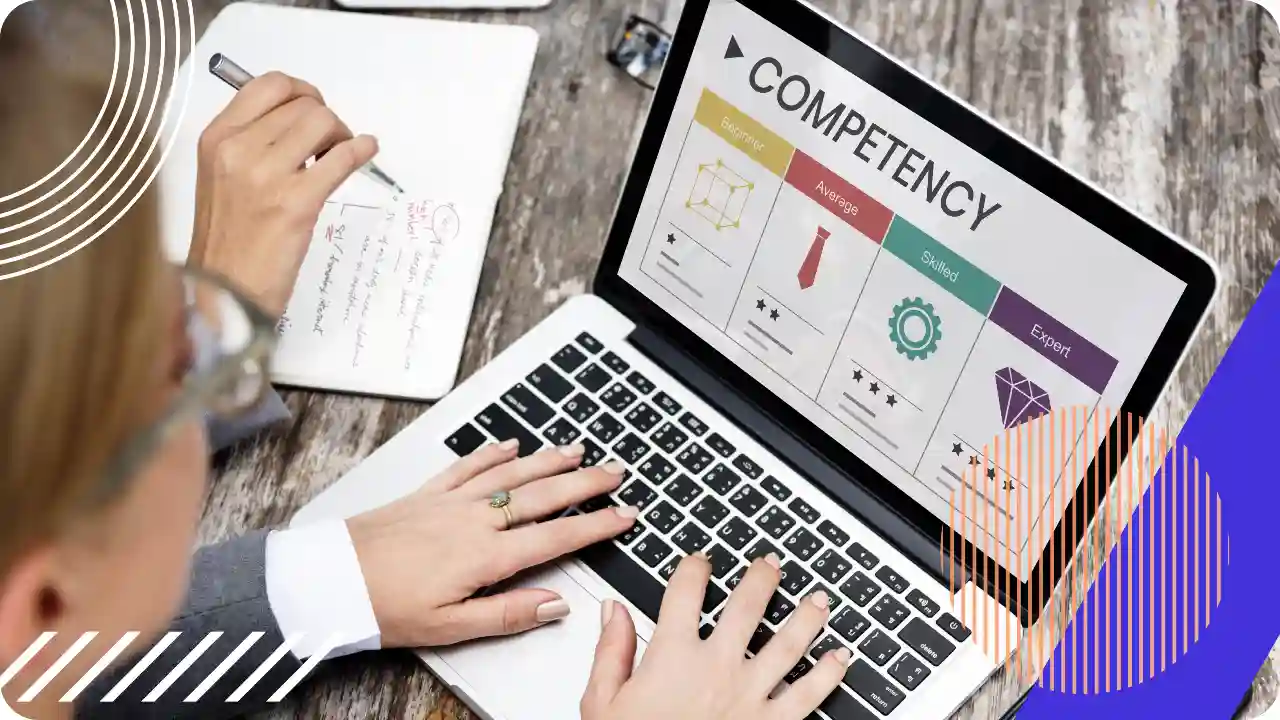
Each assessment is built around a competency framework. For example, a data analyst role might require SQL querying, data cleaning, and visualization. The platform defines what proficient performance looks like for each skill.
Instead of abstract questions, candidates perform tasks that mirror real work. A customer support assessment might involve handling a simulated chat with an angry customer. A coding assessment might require debugging a real application.
Rubrics ensure that scoring is objective. Automated scoring handles technical tasks like code correctness, while human raters or AI models evaluate subjective tasks like communication, using the same criteria across all candidates.
Platforms capture evidence such as screen recordings, code submissions, or chat transcripts. Candidates receive detailed feedback, and employers see not just a score but the work product itself.
| Dimension | Without Assessment Platform | With Skill Assessment Platform | Employability Gain |
|---|---|---|---|
| Proof of Skill | Self reported on resume | Verified through practical tests | Higher credibility |
| Employer Confidence | Based on interviews | Based on demonstrated performance | Reduced hiring risk |
| Candidate Differentiation | Similar degrees and claims | Unique skill profiles with evidence | Stand out in crowded markets |
| Access to Opportunities | Limited to networks | Matched to roles by skill fit | Wider job access |
| Learning Feedback | Generic rejection | Detailed skill gap reports | Targeted upskilling |
| Feature | Description | Candidate Benefit | Employer Benefit |
|---|---|---|---|
| Role Based Assessments | Tests mapped to specific job families | Relevant evaluation | Better fit |
| Simulations and Labs | Realistic work environments in browser | Practice that mirrors job | Predictive of performance |
| Proctoring and Integrity | Identity checks, secure browsers | Fair competition | Trusted results |
| Automated Scoring | Instant feedback on technical tasks | Quick results | Scalable screening |
| Skill Profiles | Portable, shareable competency reports | Showcase strengths | Data driven shortlisting |
Skill assessment platforms improve employability in three ways. First, they help candidates identify strengths and gaps through detailed feedback. Second, they provide credible proof that can be shared with multiple employers, reducing repetitive testing. Third, they enable matching algorithms to connect candidates to roles where they are most likely to succeed.
For example, a youth completing a retail sales assessment might score high on product knowledge but low on upselling. The platform recommends a short microlearning module, followed by a retake. With improved scores, the candidate's profile is boosted in matching for sales roles, increasing interview chances.

Assessments are most powerful when linked to learning pathways. A training and certification management system ensures that assessment results trigger personalized learning recommendations and that successful completion leads to recognized credentials. This creates a closed loop: learn, assess, certify, apply.
For employers, this integration means they can trust that certified candidates have not only passed a test but also completed aligned training. For candidates, it means a clear pathway from skill gap to job readiness.
Assessments must be designed to reduce bias. This means using clear, job relevant tasks, avoiding cultural or linguistic traps, and providing accommodations for disabilities. Platforms should monitor outcomes by demographic groups to detect adverse impact and adjust accordingly.
Transparency is also critical. Candidates should understand how they are scored and receive actionable feedback. This builds trust and supports continuous improvement.
Key metrics include assessment completion rates, average scores by competency, correlation between assessment performance and on the job success, time to hire, and candidate satisfaction. For employability, track interview to offer ratios, placement rates, and wage uplift for candidates using the platform.
Over reliance on multiple choice tests. These measure recall, not ability. Poor alignment with job tasks. Assessments must mirror real work. Lack of feedback. Candidates need actionable insights to improve. Ignoring accessibility. Platforms must work on low bandwidth devices and support multiple languages.

BM Coder builds skill assessment platforms that are secure, scalable, and candidate friendly. We design authentic assessments, implement robust scoring engines, and integrate with training and certification systems. Our platforms support remote proctoring, offline delivery, and multilingual interfaces, making them suitable for diverse contexts.
We partner with employers, training providers, and governments to ensure assessments are valid, fair, and predictive of real performance. The result is a system that improves hiring quality and boosts employability for youth and professionals alike.
Let's build your skill assessment and certification platform.
Email: [email protected]
WhatsApp: +91.9586979730
Skill assessment platforms are transforming how competencies are validated and how employability is improved. By measuring actual performance in realistic contexts, they provide trusted evidence that benefits both candidates and employers. When integrated with training and certification systems, they create seamless pathways from learning to livelihood.
For organizations looking to hire better and for youth seeking to prove their potential, investing in a robust assessment platform is no longer optional. It is the foundation of a skills based economy where ability, not background, determines opportunity.
Author: parth
