
MSME
Registered

Wedline
Registered

We Deliver
Clutch

28+ Reviews

250+ Projects
Completed

125+ Happy
Clients
MSME
Registered
Wedline
Registered
We Deliver
Clutch
28+ Reviews
250+ Projects
Completed
125+ Happy
Clients
Date: 02-05-2026
Your customer app has rate limiting, WAF rules, and penetration tests. Your admin panel, the place where support issues refunds, finance moves money, and operations edits user data, is often protected by a simple password and hope. This imbalance is why most serious data breaches do not start on the public website. They start in the back office.
An admin panel is the most privileged interface in your company. It can read every customer record, change prices, approve payouts, disable accounts, and export entire databases. If an attacker gets in, they do not need to exploit complex vulnerabilities. They just click the buttons you built for your team.
Securing the admin panel is therefore not a UI task. It is a core security strategy. At BM Coder, a software development company that builds mission critical platforms for fintech, healthcare, SaaS, and ecommerce, we treat admin security as a product requirement from day one. Our work on role-based access control software ensures that every action inside the panel is authenticated, authorized, audited, and limited to the minimum necessary privilege. This approach protects business data and stops unauthorized access before damage occurs.

Attackers follow the path of least resistance. Public apps are hardened, monitored, and frequently tested. Admin panels are often internal tools, built quickly, with broad permissions and weak logging. They are also high value. One compromised admin account can yield thousands of customer records, direct financial theft, or ransomware leverage.
The threat landscape includes credential stuffing from leaked passwords, phishing of support staff, insider threats from disgruntled employees, session hijacking on shared devices, and third-party vendor access that is never revoked. In 2024 and 2025, several high profile breaches traced back to an admin console without multi-factor authentication or proper role separation.
The business impact goes beyond data loss. Regulators fine companies for inadequate access controls under GDPR, HIPAA, PCI DSS, and India's DPDP Act. Customers lose trust when they learn that any employee could view their data. Engineering teams lose weeks to forensic investigations.
A secure admin panel stands on four pillars that work together.
1. Strong Identity: Know exactly who is logging in, with phishing resistant authentication and device trust.
2. Precise Authorization: Decide what each person can see and do, down to the field level, using roles and policies.
3. Data Protection: Encrypt sensitive data, mask it in the UI, and prevent bulk exports without approval.
4. Verifiable Audit: Log every view and change immutably, so you can detect abuse and prove compliance.
When these four pillars are implemented correctly, unauthorized access becomes difficult, lateral movement is blocked, and any misuse leaves a clear trail.
| Threat | Typical Weakness | Secure Panel Control | Result |
|---|---|---|---|
| Credential Stuffing | Password only login | MFA enforced, breached password detection | 99.9 percent of automated attacks blocked |
| Phishing | OTP codes that can be relayed | WebAuthn passkeys, SSO with device trust | Phishing resistant authentication |
| Insider Data Theft | All staff see all customers | RBAC, field masking, export approvals | Least privilege enforced |
| Session Hijacking | Long lived sessions on shared PCs | Short lived tokens, IP binding, idle timeout | Stolen cookies expire quickly |
| Privilege Escalation | Client side permission checks only | Server side policy enforcement | Unauthorized actions rejected |
| Third Party Risk | Permanent vendor accounts | Just in time access, time bound roles | Access auto expires |
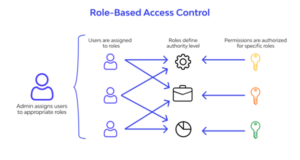
RBAC is the single most effective control for preventing unauthorized access in admin panels. Instead of giving people broad admin rights, you define roles that match real jobs, and permissions that match real tasks.
A well designed RBAC model has three layers. Roles like Support L1, Support L2, Finance Analyst, and Catalog Manager. Resources like Customer, Order, Payout, and Product. Actions like view, edit, refund, approve, and export. Policies combine these into clear rules. Support L1 can view customer and order, but cannot export. Finance can approve payouts up to 50,000 INR, but needs a second approver above that.
At BM Coder, our RBAC implementation services go beyond simple roles. We implement attribute based controls where needed. For example, a support agent can only view customers assigned to their region, or a vendor manager can only edit products for their brand. This fine grained control dramatically reduces blast radius if an account is compromised.
| Role | Customer PII | Orders | Refunds | Payouts | Exports |
|---|---|---|---|---|---|
| Support L1 | View masked | View | Up to 2,000 INR | None | None |
| Support L2 | View full with reason | Edit status | Up to 10,000 INR | None | Limited, logged |
| Finance | View masked | View | Approve any | Initiate and approve | Approved only |
| Catalog Manager | None | None | None | None | Product data only |
| Admin | Full with MFA | Full | Full | Full with maker checker | Full with approval |
Passwords alone are not authentication for admin panels. They are a liability. Secure panels enforce multi-factor authentication for every privileged user, without exception. Better yet, they move to phishing resistant methods.
We recommend SSO via SAML or OIDC connected to your corporate identity provider, combined with WebAuthn passkeys or hardware keys like YubiKey. This removes passwords from the critical path. For high risk actions like exporting data or approving payouts, require step-up authentication. The user must re-authenticate with their key even if they are already logged in.
Device trust adds another layer. Only managed laptops with up to date OS can access the admin panel. New devices trigger an approval workflow. IP allowlisting for finance functions and geo velocity checks for impossible travel further reduce risk.
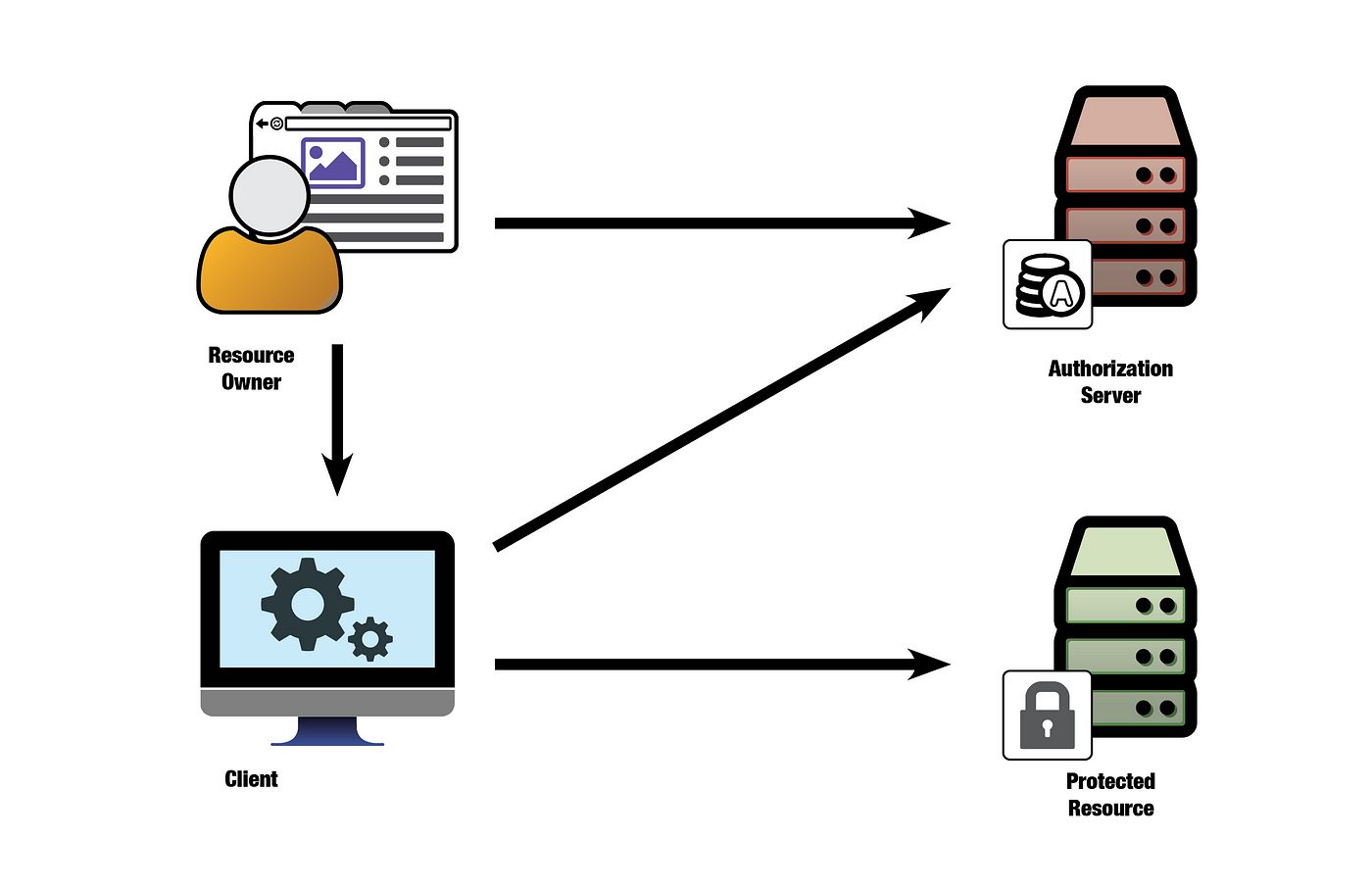
Many admin panels hide buttons in the UI but still allow the API call if someone crafts it manually. This is not security. Every request must be checked on the server against the current user's roles, attributes, and policies.
Implement a centralized policy engine. Each API endpoint asks, can this user perform this action on this resource in this context. Context includes time of day, amount, region, and risk score. Log the decision. This architecture prevents privilege escalation and makes audits straightforward.
For sensitive reads, implement purpose based access. When a support agent views full PII, they must select a reason from a dropdown like refund investigation or fraud review. The reason is logged. This simple friction reduces casual browsing and creates accountability.
Protecting data is not only about keeping attackers out. It is about limiting what insiders can see and do.
First, apply data minimization in the UI. Mask emails, phone numbers, and card tokens by default. Reveal on click with logging. Second, encrypt sensitive fields at rest using envelope encryption with keys in a managed vault. Third, prevent mass exfiltration. Block select all exports, enforce row limits, and require dual approval for large data pulls. Fourth, watermark exports with the user ID and timestamp, so leaked files can be traced.
For editing, use immutable history. Every change creates a new version. You can see who changed a price from 999 to 699, when, and from which IP. Rollback is one click. This protects against both mistakes and malicious edits.
If you cannot prove who did what, you cannot claim your panel is secure. A proper audit trail records authentication events, permission changes, data views of sensitive fields, all creates updates deletes, exports, and configuration changes. Each log includes user ID, role, timestamp, IP, device fingerprint, resource ID, action, and outcome.
Store logs in a tamper evident system separate from the application database. Forward to your SIEM in real time. Create alerts for anomalies like a support user exporting 10,000 records at 2 AM, or five failed MFA attempts followed by success. These signals catch breaches early.
Security must be built in, not tested in. We follow a secure SDLC for every admin build. Threat modeling during design identifies abuse cases. Code reviews enforce secure patterns. Static analysis catches secrets in code. Dependency scanning prevents vulnerable libraries. Dynamic testing validates authz on every endpoint.
Key technical controls include CSRF tokens for all state changing requests, strict Content Security Policy, HttpOnly and Secure cookies, same site restrictions, rate limiting per user and IP, and input validation using schemas. APIs return only the fields the user is allowed to see, never full objects filtered client side.
Technology alone is not enough. Secure panels need operational discipline. Onboarding should grant least privilege by default, with time bound elevation for specific tasks. Offboarding must revoke access within minutes, including SSO, VPN, and service accounts. Quarterly access reviews confirm that roles still match jobs.
Implement maker checker for financial actions. One person initiates a payout, another approves. Neither can do both. For break glass emergencies, provide temporary elevated access that requires VP approval, logs everything, and auto expires in one hour.
Train support and operations teams on social engineering. Most breaches start with a convincing message asking for a password reset or OTP. When staff expect step-up auth and know never to share codes, phishing success drops sharply.
A secure admin panel directly maps to major compliance frameworks. PCI DSS requires restricting access to cardholder data and logging all access. GDPR and DPDP require purpose limitation and data minimization. HIPAA requires audit controls and unique user identification. SOC 2 requires logical access controls and monitoring.
By implementing RBAC, MFA, encryption, masking, and immutable audit logs, you satisfy multiple control objectives at once. During audits, you can demonstrate policies, show logs, and prove that only authorized users accessed sensitive data for legitimate reasons.
We typically deliver admin panels as a separate application with its own API gateway. Authentication flows through your identity provider. The gateway validates tokens, enforces rate limits, and passes claims to backend services. A policy service evaluates RBAC and ABAC rules for each request. Data access goes through a service layer that applies masking and filtering, never direct database queries from the frontend.
Sensitive operations run asynchronously in a job queue with approvals. For example, a bulk export request creates a job, notifies approvers, and only upon dual approval does the worker generate the file, encrypt it, and provide a short lived download link. All steps are logged.
Frontend applications use short lived access tokens stored in memory, refresh tokens rotated on use, and strict CSP to prevent XSS. Feature flags allow you to disable risky modules instantly without redeploying.
Track leading indicators weekly. Percentage of admin users with MFA enforced should be 100 percent. Average session lifetime should be under 8 hours. Number of users with full admin rights should trend down as you refine roles. Percentage of sensitive data views with a recorded business reason should be above 95 percent.
Track lagging indicators monthly. Number of unauthorized access attempts blocked, number of privilege escalation attempts detected, mean time to revoke access on termination, and number of audit findings related to access control. When these metrics improve, your risk drops measurably.
First, shared admin accounts. When five people use [email protected], you lose accountability. Replace with named accounts and SSO. Second, permanent super admin rights for developers. Use just in time access with approval. Third, client side only permission checks. Move all enforcement server side. Fourth, no logging of reads. Add view logging for PII and financial data. Fifth, allowing exports to personal email. Restrict downloads to corporate devices and log file hashes.
This phased plan delivers immediate risk reduction in the first month while building a durable foundation.
BM Coder has delivered secure admin panels for companies handling payments, health records, and marketplace settlements. We understand that security must not slow operations. Our designs balance strong controls with smooth workflows. Support agents can still help customers quickly, but within guardrails that protect data.
We bring deep expertise in identity protocols, policy engines like Open Policy Agent, key management, and audit architectures. We also build the operational UX that makes security usable, like clear permission explanations, one click approvals, and self service access requests with automated provisioning.
Get a security review of your current admin panel and a concrete RBAC plan.
Email: [email protected]
WhatsApp: +91.9586979730
Secure admin panels do more than prevent breaches. They enable safe delegation, faster operations, and confident scaling. When every action is tied to identity, limited by role, protected by encryption, and recorded for audit, your team can move quickly without fear.
Invest in the four pillars, implement true role-based access control, and treat your admin console with the same rigor as your customer facing app. The result is protected business data, prevented unauthorized access, and a foundation for compliance and growth.
If you are ready to harden your operations console, BM Coder is ready to help. We will assess your current risks, design a secure RBAC model, and deliver an admin panel your security team will approve and your operations team will love.
Author: parth
