
MSME
Registered

Wedline
Registered

We Deliver
Clutch

28+ Reviews

250+ Projects
Completed

125+ Happy
Clients
MSME
Registered
Wedline
Registered
We Deliver
Clutch
28+ Reviews
250+ Projects
Completed
125+ Happy
Clients
Date: 02-05-2026
Access control is the quiet foundation of every secure software system. When it works, users move fast, data stays protected, and auditors are happy. When it fails, you get data leaks, privilege abuse, support tickets that never end, and compliance findings that cost real money. The difference between chaos and control is rarely a more expensive firewall. It is a well designed permissions model.
Role-Based Access Control, or RBAC, is the most proven way to manage who can do what inside modern applications. Instead of assigning permissions directly to individual users, RBAC groups permissions into roles that mirror real jobs. A support agent gets the Support role. A finance analyst gets the Finance role. When people change teams, you change their role, not a long list of checkboxes. This simple shift dramatically improves both security and operational efficiency.
At BM Coder, a software development company that builds complex SaaS platforms, marketplaces, and enterprise tools, we implement RBAC as a core architectural layer, not an afterthought. Our teams often deliver it as part of a broader control plane through our custom admin dashboard development services. A well built dashboard combined with RBAC gives business teams autonomy while keeping sensitive actions locked down by policy.
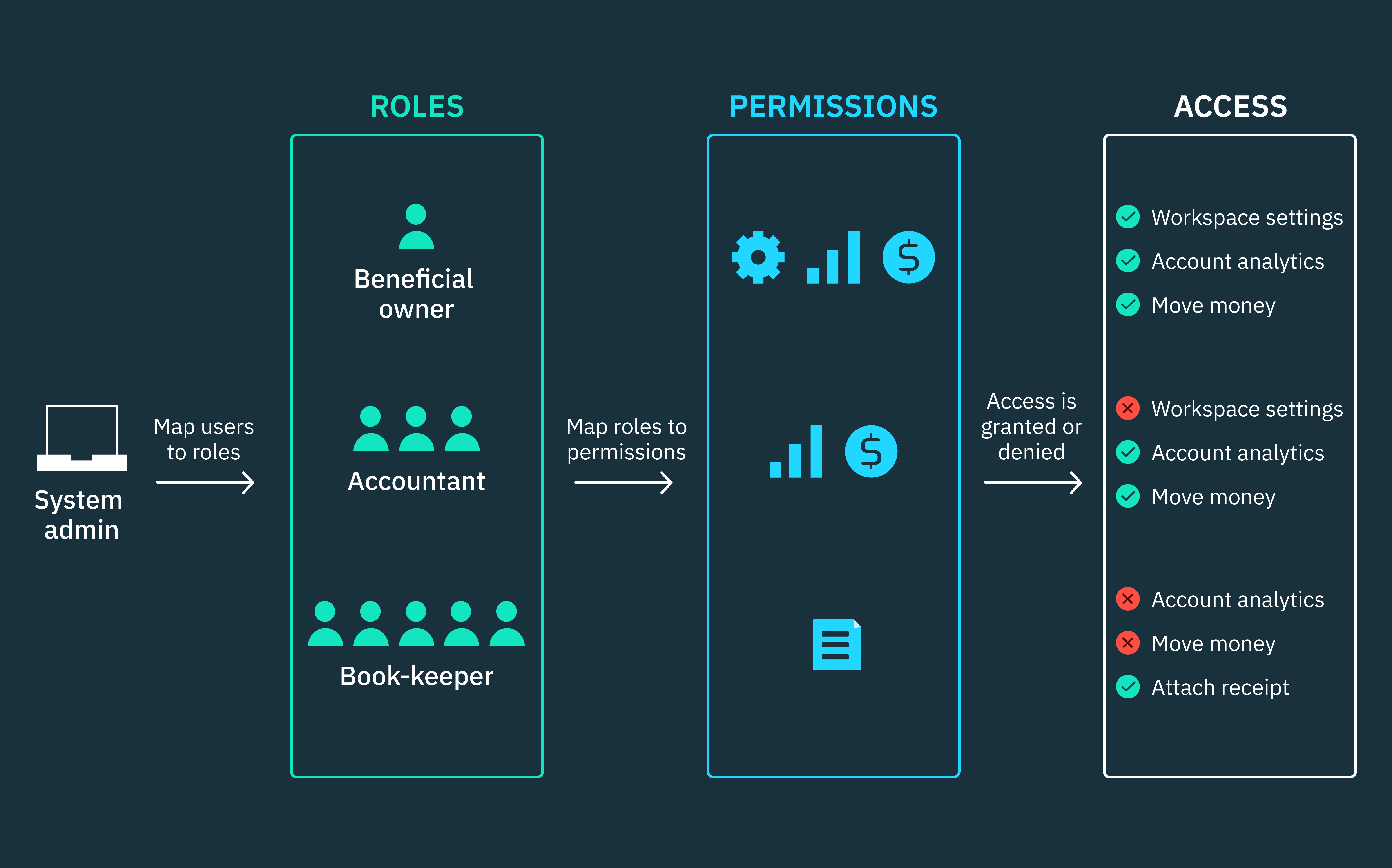
RBAC has three core building blocks. Users are the people or service accounts that log in. Roles represent job functions like Admin, Manager, Editor, Viewer, or Support L2. Permissions define the allowed actions on resources, such as view_customer, edit_order, refund_payment, or export_report.
The model works by assigning users to roles, and roles to permissions. A user inherits all permissions of their roles. When you need to change access for a whole team, you update the role once. This indirection is what makes RBAC scalable. It also creates a clear audit trail, because every action can be explained as user had role, role had permission.
Modern RBAC often includes hierarchies and constraints. A Senior Support role can inherit all permissions from Support and add a few more. Separation of duties constraints prevent the same user from both initiating and approving a payout. These extensions keep the model simple for day to day use while handling real world complexity.
Security improves when access follows the principle of least privilege. People should have exactly the permissions needed for their job, nothing more, and only for as long as needed. RBAC makes least privilege practical at scale.
First, RBAC reduces overprivileged accounts. Instead of giving everyone admin access because it is easier, you define precise roles. Second, it limits blast radius. If a support account is compromised, the attacker cannot delete databases or approve payouts because those permissions are not in the Support role. Third, it enables consistent enforcement. Permissions are checked server side against the role, not hidden in the UI. Fourth, it supports segregation of duties. Critical actions require two roles, maker and checker, which stops both mistakes and fraud.
RBAC also improves detection. When every action is tied to a role, anomalies stand out. A Viewer role suddenly attempting to export 50,000 records is a clear signal. Security teams can create alerts based on role behavior, not just individual users.

User management is where most teams feel the pain. Onboarding a new employee should take minutes, not days. Offboarding should be instant and complete. RBAC makes both possible.
Onboarding becomes assign role and go. The new finance analyst gets the Finance Analyst role and immediately has the correct access to ledgers, reports, and approvals, with no manual checklist. Offboarding becomes remove from roles and disable user. There is no hunt for stray permissions across ten systems. Role changes are also simple. When someone is promoted from Support L1 to L2, you swap the role. Their access updates everywhere consistently.
For managers, RBAC provides visibility. They can see which roles their team holds and request changes through a self service portal. For IT, it reduces tickets by 40 to 60 percent in most organizations, because common requests are preapproved by role design.
| Model | How It Works | Strengths | Weaknesses | Best Fit |
|---|---|---|---|---|
| Discretionary Access Control | Owners grant access per resource | Simple for small teams | No central policy, hard to audit | Personal drives, early startups |
| Access Control Lists | Each resource lists allowed users | Fine grained | Does not scale, sprawl | File shares, legacy apps |
| Role-Based Access Control | Users get roles, roles have permissions | Scalable, auditable, least privilege | Needs role design discipline | SaaS, enterprise, marketplaces |
| Attribute-Based Access Control | Policies use attributes like department, location | Very flexible, dynamic | Complex to design and debug | Highly regulated, multi-tenant |
| Policy-Based Access Control | Central engine evaluates policies | Consistent across services | Requires policy expertise | Microservices at scale |
Most successful systems start with RBAC and add attributes or policies where needed. For example, a Support role plus an attribute for region equals access only to customers in APAC. This hybrid keeps the model understandable while handling edge cases.
A robust RBAC implementation includes more than a roles table. You need identity integration, policy enforcement, and observability.
Identity integration connects to your SSO provider via SAML or OIDC. Groups in your identity provider map to roles in the application. This ensures joiners, movers, and leavers are handled centrally. Multi-factor authentication is enforced for all privileged roles.
Policy enforcement happens server side on every request. The API gateway or service layer checks, does this user with these roles have permission to perform this action on this resource. Deny by default. Log the decision with context.
Resource scoping limits access to subsets of data. A vendor manager can edit products, but only for their vendor ID. A regional manager can view orders, but only for their region. This is often called data level or row level security.
Observability means you can answer who has access to what, who granted it, and who used it. Provide role inventory dashboards, access review workflows, and immutable audit logs.
| Role | View Customers | Edit Orders | Issue Refunds | Manage Payouts | Export Data | Manage Roles |
|---|---|---|---|---|---|---|
| Viewer | Yes, masked PII | No | No | No | No | No |
| Support L1 | Yes | Limited status updates | Up to 2,000 INR | No | No | No |
| Support L2 | Yes | Yes | Up to 10,000 INR | No | With approval | No |
| Finance Analyst | Masked | No | Approve any | Initiate | Approved | No |
| Finance Manager | Masked | No | Approve any | Approve | Approved | No |
| Admin | Full | Full | Full | Full with maker checker | Full with approval | Yes |
Good role design starts with job analysis, not with your current database tables. Interview team leads. List the top 20 tasks each team performs daily. Group tasks into coherent roles. Name roles clearly and avoid vanity titles. Support L1 and Support L2 are better than Ninja and Guru.
Keep the number of roles manageable. Most organizations thrive with 8 to 15 core roles, plus a few scoped variants. Too many roles create confusion. Too few roles force overprivilege. Use role hierarchies to inherit common permissions, then add specific ones at the child level.
Document each role with purpose, permissions, constraints, and examples. Publish this in your internal wiki and inside the admin panel itself. When users understand why access is granted, they request fewer exceptions.
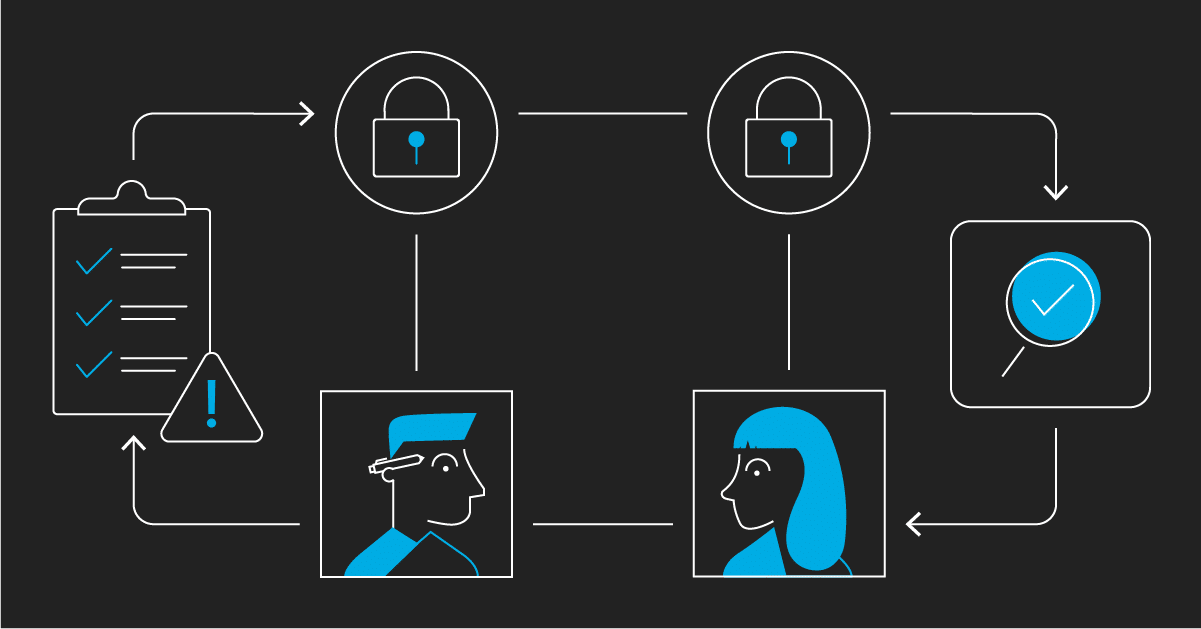
During development, RBAC shapes your API design. Endpoints require specific permissions, and tests verify both allowed and denied cases. During deployment, RBAC integrates with CI pipelines to ensure only release managers can promote to production. During operations, RBAC powers the admin dashboard where business users work safely.
For data heavy products, combine RBAC with data masking. A support agent sees order history but phone numbers are masked until they click reveal with a reason. For financial products, combine RBAC with maker checker. One role initiates, a different role approves. For multi-tenant SaaS, combine RBAC with tenant isolation. Roles are scoped to a tenant ID, preventing cross tenant access even if a bug occurs.
| Level | Characteristics | Security Posture | User Management Effort |
|---|---|---|---|
| 1 Ad Hoc | Direct user permissions, shared accounts | Weak, no audit | High manual work |
| 2 Basic RBAC | 5 to 7 roles, UI checks only | Improved, inconsistent enforcement | Medium |
| 3 Enforced RBAC | Server side checks, SSO, MFA for admins | Strong baseline | Low |
| 4 Advanced RBAC | Hierarchies, SoD, data scoping, audit logs | Enterprise ready | Very low |
| 5 Adaptive | ABAC attributes, just in time access, risk based step up | Best in class | Automated |
Pitfall one is role explosion. Teams create a new role for every exception. Solve this with parameterized roles and attributes. Instead of Support Mumbai and Support Delhi, use Support with region attribute.
Pitfall two is client side only enforcement. Hiding buttons is not security. Always enforce on the server and return only data the user is allowed to see.
Pitfall three is missing access reviews. Roles drift over time. Schedule quarterly reviews where managers confirm their team's roles. Automate reminders and revoke stale access.
Pitfall four is overprivileged service accounts. Bots and integrations often get admin. Scope service accounts to minimum permissions and rotate credentials.
Pitfall five is poor naming. Avoid roles like Temp Access or Test. Use descriptive names with ownership and expiry dates built in.
Regulators care about access control because it directly protects personal and financial data. RBAC maps cleanly to common frameworks. SOC 2 requires logical access controls and least privilege. ISO 27001 requires access provisioning and review. PCI DSS requires restricting access to cardholder data. GDPR and India's DPDP Act require purpose limitation and data minimization.
With RBAC, you can demonstrate that only Finance roles access payout data, that exports require approval, and that all access is logged. During audits, export a report of users, roles, permissions, and last usage. This single artifact answers most auditor questions.
The admin dashboard is where RBAC becomes tangible for business users. At BM Coder, we build dashboards where permissions drive the entire experience. Menus, buttons, and data fields appear only if the role allows them. Attempts to access unauthorized routes redirect with a clear explanation.
We also build self service access requests. A user clicks request access, selects a role and reason, and the system routes to their manager and security for approval. Upon approval, access is granted automatically and expires if temporary. This reduces IT tickets while maintaining control.
For sensitive actions, we implement step up authentication and justification. Issuing a refund above a threshold requires re-authentication and a ticket number. The system logs who, what, when, why, and from where. This satisfies both security and customer support needs.
A modern RBAC stack typically includes an identity provider for SSO and MFA, a policy decision point for evaluating permissions, and a policy enforcement point in each service. Many teams use Open Policy Agent or a similar engine to centralize rules. Permissions are stored as structured data, for example action resource scope, and evaluated at runtime.
APIs follow a consistent pattern. Every request carries the user identity and roles. The service calls the policy engine with user, action, resource, and context. The engine returns allow or deny with a reason. The service logs the decision. Frontend applications never trust their own state, they render based on permissions returned from the backend.
For performance, cache policy decisions for short periods with invalidation on role changes. For multi-tenant systems, always include tenant ID in the policy evaluation to prevent cross tenant leaks.
Track metrics that connect RBAC to business outcomes. Time to onboard a new employee should drop from days to under 30 minutes. Percentage of users with admin rights should be under 2 percent. Number of access related incidents should trend down quarter over quarter. Percentage of actions that required escalation due to missing permissions should be under 5 percent, indicating roles match reality.
Security metrics include MFA coverage for privileged roles at 100 percent, percentage of permissions enforced server side at 100 percent, and access review completion rate above 95 percent. These numbers give leadership confidence and guide continuous improvement.
SaaS platforms: Use tenant scoped roles like Tenant Admin, Member, Billing. Add feature flags as permissions to control beta access.
Marketplaces: Separate platform roles from seller roles. Sellers manage their catalog but cannot see other sellers data. Platform ops have cross seller visibility with audit.
Fintech: Enforce strict segregation of duties. Initiate payout, approve payout, and reconcile payout are three distinct roles. Add time based constraints for after hours actions.
Healthcare: Combine RBAC with purpose of use. Clinicians see patient data only for assigned cases, with break glass for emergencies that is fully logged.
We start with discovery workshops to map real jobs to roles. We review current pain points, audit logs, and compliance needs. Then we design a role catalog, permission matrix, and policy model. We implement SSO and MFA first, because identity is the foundation.
Next, we build the policy layer and integrate it into your APIs and admin dashboard. We add data scoping, masking, and approval flows for sensitive actions. We deliver access review tools and dashboards so managers can manage their teams without IT. Finally, we train your teams and hand over runbooks for ongoing governance.
Our delivery aligns with your existing stack, whether Node.js, Python, Java, or Go, and works with cloud identity providers like Azure AD, Okta, Google Workspace, and AWS IAM Identity Center.
Talk to BM Coder about RBAC design and a secure admin dashboard.
RBAC is evolving. Leading teams add just in time access, where elevated permissions are granted for a limited window after approval, then auto revoked. Risk based step up authentication prompts for stronger factors when behavior is unusual. Attribute based policies allow dynamic decisions like allow edit if user department equals finance and amount less than 50,000 and time between 9 and 18.
AI copilots inside admin tools will suggest least privilege roles based on actual usage, highlighting permissions that are never used. This continuous optimization keeps roles tight as the product evolves.
Role-Based Access Control improves security by enforcing least privilege, enabling segregation of duties, and creating clear audit trails. It improves user management by making onboarding, role changes, and offboarding fast, consistent, and self service. The result is a software system where teams move quickly within safe boundaries, and sensitive data stays protected.
If your current system relies on shared admin accounts, manual permission spreadsheets, or client side checks, now is the time to upgrade. BM Coder can help you design a practical RBAC model, implement it across your services, and deliver a custom admin dashboard where roles come to life for your business users.
Contact us today to start your RBAC assessment and build access control that scales with your growth.
Author: parth
