
MSME
Registered

Wedline
Registered

We Deliver
Clutch

28+ Reviews

250+ Projects
Completed

125+ Happy
Clients
MSME
Registered
Wedline
Registered
We Deliver
Clutch
28+ Reviews
250+ Projects
Completed
125+ Happy
Clients
Date: 18-03-2026
In today’s healthcare landscape, hospitals face the dual challenge of providing high-quality patient care while managing complex billing processes. Inefficient billing not only slows down revenue collection but can also impact patient satisfaction. Revenue Cycle Management (RCM) software has emerged as a powerful solution for hospitals to streamline their billing workflows, reduce errors, and optimize financial performance.
At BM Coder, we specialize in developing tailored RCM software that transforms hospital billing operations, ensuring accuracy, efficiency, and compliance.
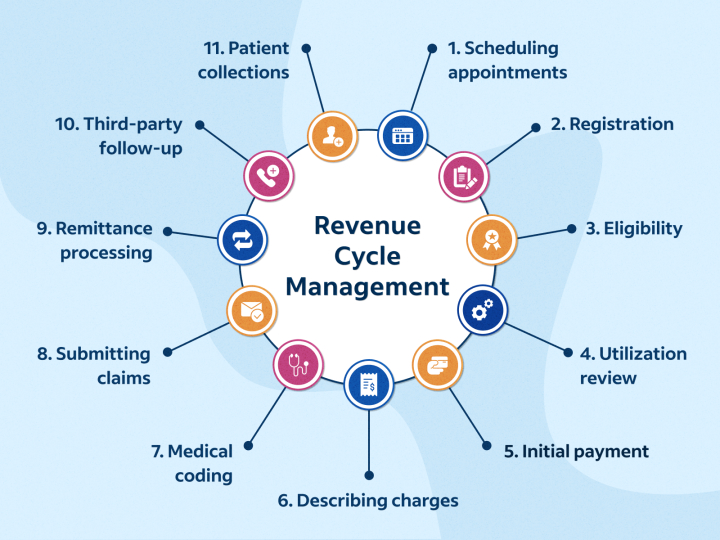
Revenue Cycle Management refers to the process hospitals and healthcare providers use to track patient care from initial appointment scheduling to final payment collection. It encompasses all administrative and clinical functions that contribute to the capture, management, and collection of patient service revenue.
RCM ensures that every service provided is properly documented, billed, and reimbursed. It integrates multiple departments, including registration, insurance verification, coding, claims submission, payment posting, and reporting.
Without an effective RCM system, hospitals often encounter these common billing challenges:
RCM software is designed to automate and streamline the entire revenue cycle. Here are the core ways it helps hospitals optimize billing:
RCM software can automate the collection of patient demographic information and verify insurance eligibility in real-time. This reduces errors, ensures accurate billing, and decreases claim denials.
Advanced RCM systems provide integrated coding tools to assign correct procedure and diagnosis codes. This ensures compliance with ICD-10 and CPT standards, minimizing errors that lead to rejections or audits.
RCM software automates claims generation and submission to insurance providers. Real-time validation checks reduce claim denials, while automated follow-ups ensure faster reimbursements.
The system posts payments automatically, identifies discrepancies, and reconciles accounts with minimal manual intervention. Hospitals can gain clear insight into outstanding balances and revenue gaps.
RCM software provides detailed reporting and analytics on key performance metrics such as collection rates, denial rates, and cash flow. Hospitals can make data-driven decisions to optimize operations.
| Benefit | Description |
|---|---|
| Reduced Claim Denials | Automated verification and coding reduce errors and rejections. |
| Faster Revenue Collection | Automated workflows and follow-ups improve cash flow. |
| Lower Administrative Costs | Minimizes manual work and administrative overhead. |
| Improved Compliance | Ensures adherence to coding standards and regulatory requirements. |
| Better Patient Experience | Transparent billing and quick issue resolution increase satisfaction. |
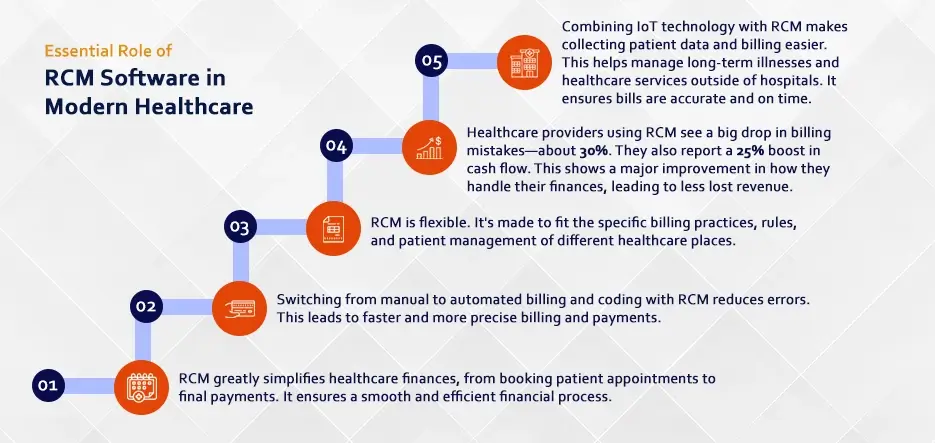
Healthcare is increasingly complex, with evolving insurance regulations, patient expectations, and financial pressures. Hospitals cannot afford delays or errors in billing, as they directly affect revenue and operational efficiency.
Implementing RCM software allows hospitals to:
When selecting an RCM system, hospitals should consider the following factors:
| Factor | Key Considerations |
|---|---|
| Integration | Compatibility with existing EHR, EMR, and hospital management systems. |
| Scalability | Ability to handle growing patient volume and multi-location operations. |
| User-Friendly Interface | Intuitive dashboards and reporting for staff efficiency. |
| Compliance Features | Built-in tools to ensure adherence to HIPAA and regulatory standards. |
| Customer Support | Reliable technical support for implementation and troubleshooting. |

Successfully deploying RCM software requires careful planning and execution. Hospitals should follow these best practices:
Consider a mid-sized hospital struggling with high claim denials and delayed reimbursements. After implementing BM Coder’s RCM solution:
This demonstrates the tangible benefits hospitals can achieve by leveraging modern RCM software.
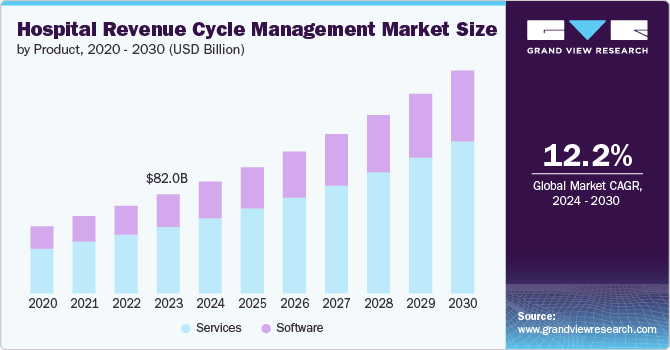
The RCM landscape is evolving rapidly with technology-driven innovations. Hospitals adopting these trends can gain a competitive edge:
Revenue Cycle Management software is no longer a luxury—it is a necessity for hospitals striving to improve financial performance, streamline operations, and enhance patient experience. By automating key billing processes, minimizing errors, and providing actionable insights, RCM software transforms the revenue cycle from a challenge into a strategic advantage.
If your hospital is ready to optimize its billing and revenue management, reach out to BM Coder for a customized RCM solution.
Author: parth
