
MSME
Registered

Wedline
Registered

We Deliver
Clutch

28+ Reviews

250+ Projects
Completed

125+ Happy
Clients
MSME
Registered
Wedline
Registered
We Deliver
Clutch
28+ Reviews
250+ Projects
Completed
125+ Happy
Clients
Date: 10-04-2026
Blog Slug URL: /logistics-software-api-integration/how-port-logistics-software-optimizes-cargo-movement-and-operations
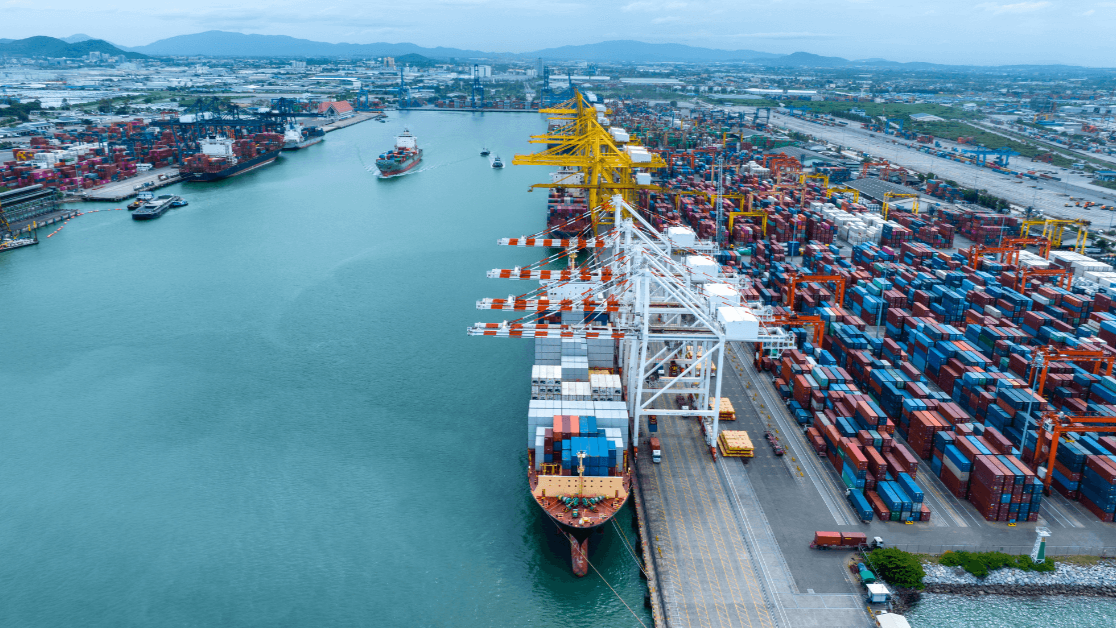
Ports are the backbone of global trade, handling millions of tons of cargo every day. From containerized goods to bulk shipments, efficient cargo movement through ports is critical for maintaining supply chain continuity. However, managing port operations is complex, involving multiple stakeholders, large-scale infrastructure, and time-sensitive processes.
Traditional port management methods often struggle to keep up with increasing cargo volumes and operational demands. This is where port logistics software plays a vital role in transforming operations.
Modern solutions leverage automation, real-time data, and system integrations to streamline workflows, reduce delays, and enhance operational visibility.
If you're aiming to modernize your logistics systems, explore our logistics software API integration solutions designed to connect systems, improve data flow, and optimize port and supply chain operations.
---
Port logistics involves managing the flow of goods through ports, including:
Efficient coordination of these activities is essential to avoid bottlenecks and ensure timely cargo movement.
---| Challenge | Description |
|---|---|
| Congestion | High cargo volumes lead to delays and bottlenecks |
| Manual Processes | Paper-based systems slow down operations |
| Lack of Visibility | Limited real-time tracking of cargo and vessels |
| Coordination Issues | Multiple stakeholders create communication gaps |
| Compliance Complexity | Regulatory requirements vary across regions |
Port logistics software is a digital platform that manages and optimizes port operations by integrating various processes into a unified system. It provides real-time insights, automates workflows, and enhances coordination among stakeholders.
---
| Feature | Function |
|---|---|
| Vessel Scheduling | Efficient allocation of berths and docking schedules |
| Cargo Tracking | Real-time monitoring of shipments |
| Inventory Management | Tracks cargo storage and movement |
| Document Automation | Manages bills of lading, invoices, and customs documents |
| Integration Capabilities | Connects with external systems via APIs |
| Analytics & Reporting | Provides insights for operational improvement |
Software enables real-time tracking of cargo from arrival to departure, ensuring transparency and better coordination.
Advanced algorithms optimize vessel docking schedules, reducing waiting times and improving port utilization.
Automation reduces paperwork and ensures compliance with international regulations.
Equipment, labor, and storage space are allocated intelligently to maximize efficiency.
Integration with customs, shipping lines, and transport systems ensures smooth data flow and coordination.
---
Optimized scheduling and resource management minimize bottlenecks.
Automation accelerates processes and reduces manual intervention.
Real-time insights enable better decision-making.
Efficient operations lower labor and operational costs.
Automated documentation ensures adherence to regulations.
---| Aspect | Traditional Systems | With Software |
|---|---|---|
| Data Management | Manual and fragmented | Centralized and digital |
| Efficiency | Low | High |
| Visibility | Limited | Real-time |
| Accuracy | Error-prone | Highly accurate |
| Scalability | Limited | Highly scalable |
API integration is a critical component of modern port logistics software. It enables seamless communication between different systems such as:
This interconnected ecosystem ensures real-time data exchange and improved coordination.
---| Metric | Impact |
|---|---|
| Vessel Turnaround Time | Reduced significantly |
| Cargo Handling Speed | Increased |
| Operational Costs | Lowered |
| Resource Utilization | Optimized |
| Customer Satisfaction | Improved |

The future of port logistics is driven by advanced technologies:
Port logistics software is revolutionizing how cargo is managed and transported across global trade networks. By optimizing operations, improving visibility, and enabling seamless integration, it empowers ports to handle increasing cargo volumes efficiently.
As global trade continues to expand, adopting advanced logistics solutions will be essential for maintaining competitiveness and operational excellence.
---Ready to enhance cargo movement and streamline port operations?
Contact us today:
📧 Email: [email protected]
📱 WhatsApp: +91 9586979730
At BM Coder, we specialize in developing advanced port logistics and API-integrated software solutions tailored to your business needs.
Author: parth
