
MSME
Registered

Wedline
Registered

We Deliver
Clutch

28+ Reviews

250+ Projects
Completed

125+ Happy
Clients
MSME
Registered
Wedline
Registered
We Deliver
Clutch
28+ Reviews
250+ Projects
Completed
125+ Happy
Clients
Date: 30-04-2026
By BM Coder — Enterprise Software Development Company
Most software starts simple. A single codebase, one database, one team. It works perfectly for the first 10,000 users. Then growth happens. New features take months because every change risks breaking something else. Deployments require weekend downtime. The database becomes a bottleneck. Scaling means buying a bigger, more expensive server, not adding capacity where needed.
This is the monolith trap. It limits speed, increases risk, and makes innovation expensive. Companies that stay in this trap lose to competitors who ship faster and scale cheaper.
Microservices architecture solves this by design. Instead of building one large application, you build a collection of small, independent services, each focused on a specific business capability, each deployable and scalable on its own. At BM Coder, we have migrated dozens of monoliths to microservices for fintech, e-commerce, healthcare, and SaaS platforms. This transformation is never just about code splitting. It requires robust automation, which is why every microservices project we deliver is powered by our DevOps and CI/CD services to ensure continuous delivery, automated testing, and zero downtime deployments.
We design, build, and migrate to scalable microservices architectures with full DevOps automation.
Email: [email protected]
WhatsApp: +91 95869 79730
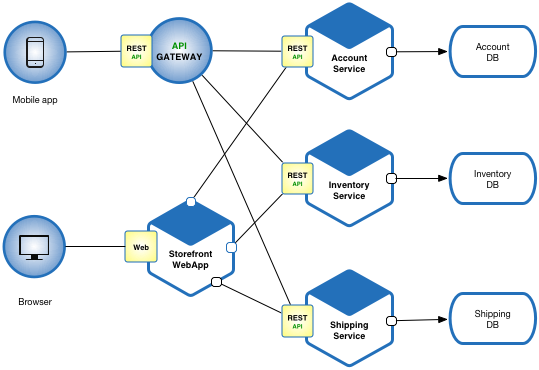
Microservices is an architectural style where an application is composed of loosely coupled services. Each service owns its data, runs in its own process, and communicates with others through well defined APIs, typically REST, gRPC, or events.
Key characteristics include single responsibility, each service does one thing well, decentralized data management, independent deployment, and technology diversity. The payment service might use Java and PostgreSQL, while the recommendation service uses Python and Redis.
This is fundamentally different from a monolith where all modules share the same codebase, memory, and database. In microservices, failure is isolated. If the notification service goes down, checkout still works.
| Aspect | Monolithic Architecture | Microservices Architecture | Business Impact |
|---|---|---|---|
| Scalability | Scale entire application | Scale individual services | 40 to 60 percent lower infra cost |
| Deployment | Big bang, high risk | Independent, daily deploys | 10x faster release cycles |
| Fault Isolation | One bug crashes all | Failure contained to service | Higher availability |
| Technology | Single stack locked in | Polyglot, best tool for job | Future proof innovation |
| Team Structure | Large shared team | Small autonomous teams | Faster ownership and speed |
| Data Management | Single shared database | Database per service | No contention, better performance |

Scalability has two dimensions, handling more users and handling more complexity. Microservices excel at both.
1. Independent Horizontal Scaling: In an e-commerce platform, product catalog receives 80 percent of traffic during a sale, while checkout receives 20 percent. With microservices, you scale the catalog service to 100 instances and checkout to 20. In a monolith, you would need to scale 100 copies of everything, wasting resources. Kubernetes makes this automatic with Horizontal Pod Autoscaler.
2. Elastic Scaling: Services scale based on real metrics. A video processing service scales on queue depth. An API scales on requests per second. When load drops, instances terminate automatically. This elasticity is impossible with monoliths.
3. Data Scalability: Each service owns its database. The user service can use a relational database, the analytics service can use a column store, the session service can use Redis. This avoids the single database bottleneck that kills monolith performance at scale. You can also shard and replicate per service needs.
4. Geographic Scalability: Services can be deployed close to users. A content service can run in multiple regions via CDN, while payment service stays in a compliant region. This improves latency and meets data residency requirements.
Flexibility means changing fast without breaking things. Microservices provide this in four ways.
Technology Flexibility: You are not locked into one language or framework. A team can rewrite the search service in Go for performance while the rest stays in Node.js. You adopt new technology incrementally, not through risky big rewrites.
Deployment Flexibility: Each service deploys independently. The marketing team can ship a new promotion engine three times a day without waiting for the core banking team. Feature flags and canary deployments reduce risk to near zero. Our DevOps and CI/CD services implement these pipelines with automated testing and rollback.
Organizational Flexibility: Conway's Law states that architecture mirrors organization. Microservices enable small, cross functional teams that own a service end to end. This reduces coordination overhead and increases speed. Amazon's two pizza teams are the classic example.
Business Flexibility: New capabilities can be added as new services without touching existing code. Want to add BNPL? Build a BNPL service that calls existing payment and user APIs. This composability allows rapid experimentation and new revenue streams.
| Pattern | Problem Solved | Implementation | Scalability Benefit |
|---|---|---|---|
| API Gateway | Client complexity | Single entry point, routing | Centralized auth and rate limiting |
| Database per Service | Data coupling | Each service owns schema | Independent scaling and evolution |
| Saga Pattern | Distributed transactions | Choreography or orchestration | Consistency without 2PC locks |
| CQRS | Read write contention | Separate read and write models | Scale reads independently |
| Event Driven | Tight coupling | Kafka, event bus | Async processing, loose coupling |
| Circuit Breaker | Cascading failures | Istio, Resilience4j | System stays available under stress |
Successful microservices start with domain boundaries, not technical layers. We use Domain Driven Design to identify bounded contexts, user management, catalog, inventory, orders, payments, notifications. Each becomes a service.
Communication is key. Synchronous REST is simple but creates coupling. For scalability, we prefer asynchronous events for most workflows. When an order is placed, the order service publishes OrderCreated event. Inventory, payment, and shipping services consume it independently. This decouples services and allows each to scale at its own pace.
Data ownership is strict. No service accesses another service's database directly. All interaction goes through APIs or events. This prevents hidden coupling that destroys flexibility later.
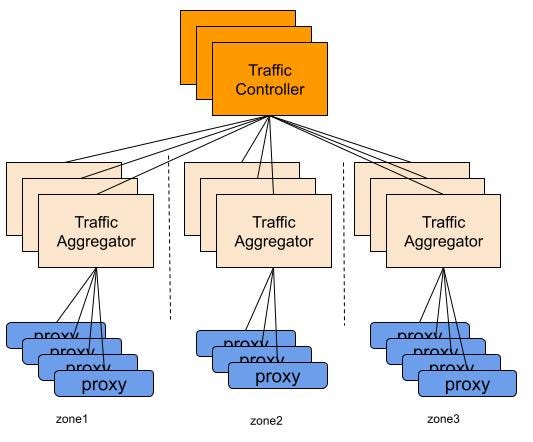
Microservices improve performance through specialization. The search service can be optimized with Elasticsearch and aggressive caching. The image service can use CDN and WebP conversion. Each service gets the right resources.
Latency is managed through patterns. API gateway does request aggregation to reduce client calls. Caching at multiple layers, CDN, API gateway, service cache, reduces database load by 80 percent. gRPC is used for internal service to service calls for low latency binary communication.
Observability is mandatory. Distributed tracing with OpenTelemetry shows the full path of a request across 15 services. We can pinpoint that 90 percent of latency comes from one slow database query in the pricing service, and fix it without guessing.
| Phase | Focus | Key Activities | Outcome |
|---|---|---|---|
| 1. Assess | Identify boundaries | Domain modeling, dependency map | Clear service candidates |
| 2. Foundation | Platform setup | Kubernetes, CI/CD, monitoring | Ready to deploy services |
| 3. Strangler | Extract first service | Build facade, route traffic | Prove pattern with low risk |
| 4. Scale | Extract core services | Implement sagas, events | Independent teams and deploys |
| 5. Optimize | Performance and cost | Autoscaling, chaos testing | Production grade resilience |
Microservices without automation is chaos. With 50 services, you cannot deploy manually. This is why DevOps is not optional, it is foundational.
Every service has its own pipeline. Code commit triggers build, unit tests, integration tests, container build, security scan, and deployment to staging. Promotion to production is automated with approvals and canary analysis.
Infrastructure is managed as code with Terraform. Monitoring is centralized with Prometheus and Grafana. Logging uses ELK or Loki. Tracing uses Jaeger. When something fails, teams get alerted with context, not just a page.
BM Coder implements this complete automation through our DevOps and CI/CD services, ensuring your microservices architecture delivers speed safely.
Microservices add complexity. The main challenges are distributed transactions, data consistency, and operational overhead.
We solve transactions with the Saga pattern instead of two phase commit. For consistency, we accept eventual consistency where business allows, and use outbox pattern for reliable events.
Operational overhead is solved with platform engineering. We build golden paths, templates for new services with built in monitoring, logging, and CI/CD. A new team can create a production ready service in 10 minutes.
Another pitfall is building nanoservices, services that are too small. We follow the rule, a service should be owned by one team and deployable independently, not smaller.
For a fintech client, we split a monolithic loan platform into 12 microservices. Deployment frequency went from monthly to 30 per week. The credit scoring service now scales to 50 instances during peak application hours, while other services stay at 5. Infrastructure cost dropped 35 percent.
For a logistics SaaS, we extracted tracking, routing, and billing services. A bug in billing no longer affects tracking. The company now onboards enterprise clients in days instead of months because they can customize only the billing service.
For an e-learning platform, we implemented event driven microservices. During live classes with 100,000 concurrent users, the chat service scaled independently without affecting video streaming.
We start with architecture assessment, not coding. We map domains, data flows, and team structure. We design the target architecture with clear service contracts using OpenAPI and AsyncAPI.
We build the platform first, Kubernetes cluster, service mesh with Istio, API gateway, Kafka for events, and full observability stack. Then we migrate using strangler fig pattern, extracting high value services first like authentication or payments.
Every service includes health checks, metrics, tracing, and CI/CD from day one. We train your teams on ownership model and provide runbooks. Our goal is not just to deliver code, but to enable your organization to scale engineering.

Microservices are evolving toward serverless and platform engineering. Functions as a service will handle event driven workloads with even finer scaling. Service mesh will become transparent with eBPF. AI will assist in service decomposition and performance tuning.
The core principles will remain, small, independent, scalable services that enable business agility.
Microservices architecture improves scalability by allowing independent, elastic scaling of business capabilities. It improves software flexibility by enabling independent deployments, technology diversity, and autonomous teams.
The benefits are real, faster releases, lower costs, higher availability, and the ability to innovate without fear. But success requires more than splitting code. It requires solid design, automation, and operational excellence.
BM Coder brings all three, proven microservices design, production grade platforms, and comprehensive DevOps automation.
Book a free architecture workshop. We will review your current system and design a migration roadmap.
Email: [email protected]
WhatsApp: +91 95869 79730
Author: parth
