
MSME
Registered

Wedline
Registered

We Deliver
Clutch

28+ Reviews

250+ Projects
Completed

125+ Happy
Clients
MSME
Registered
Wedline
Registered
We Deliver
Clutch
28+ Reviews
250+ Projects
Completed
125+ Happy
Clients
Date: 29-04-2026
By BM Coder — Enterprise Software Development Company
Ten years ago, paying someone meant cash, a cheque, or a slow NEFT transfer that settled the next day. Opening a bank account required a branch visit, physical documents, and a week of waiting. Getting a loan meant paperwork, phone calls, and manual underwriting.
Today, a vegetable vendor in Ahmedabad accepts UPI in two seconds. A college student gets a personal loan approved in four minutes on their phone. A small business reconciles all its payments automatically before breakfast. This shift is not just about mobile apps. It is about fintech software fundamentally rewiring how money moves, how risk is assessed, and how financial services are delivered.
At BM Coder, we build the platforms that power this transformation for banks, NBFCs, payment aggregators, and fast growing startups. While our core strength is in financial technology, the same principles of secure, scalable, API first engineering power our work in other regulated domains, including our software development for education practice where we build fee payment systems, digital campuses, and learning platforms with fintech grade security.
From UPI and wallets to lending and core banking, we design and develop production ready fintech software.
Email: [email protected]
WhatsApp: +91 95869 79730
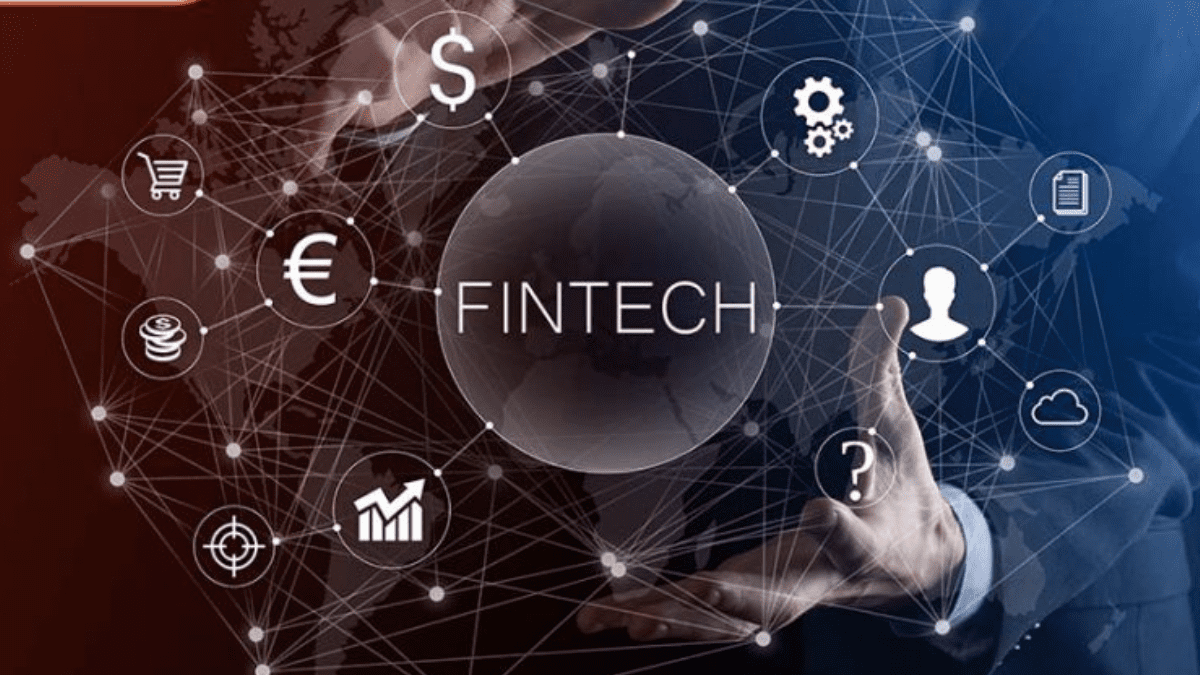
Fintech software is not a single product. It is a stack of capabilities that replaces manual, branch based processes with real time, data driven workflows. At its heart are four layers.
First, the experience layer. Mobile apps, web portals, and partner APIs that customers interact with. Second, the orchestration layer. Workflows for KYC, payments, lending decisions, and compliance checks. Third, the core ledger and risk engines that maintain the single source of truth for balances and exposures. Fourth, the integration layer that connects to NPCI, card networks, bureaus, account aggregators, and ERPs.
When these layers are built correctly, a payment is not just a database update. It is an event that triggers fraud checks, updates the ledger, notifies the customer, reconciles with the bank, posts to accounting, and feeds analytics, all in under two seconds.
| Capability | Traditional Model | Fintech Software Model | Business Impact |
|---|---|---|---|
| Payments | Batch NEFT, end of day settlement | UPI, IMPS, real time webhooks | Instant confirmation, 24x7 availability |
| Onboarding | Branch visit, physical KYC | Video KYC, Digilocker, PAN API | Onboarding time from days to minutes |
| Lending | Manual underwriting, paper statements | Account Aggregator, AI scoring | Approval in minutes, lower NPAs |
| Reconciliation | Excel, T+3 manual matching | Auto reconciliation, ledger streaming | Daily close, zero leakage |
| Compliance | Periodic audits, sample checks | Real time monitoring, audit trails | Reduced regulatory risk |
Payments are the most visible part of fintech transformation. In India, UPI processed over 16 billion transactions in a single month in 2025, a volume that legacy systems were never designed for. This scale was possible only because of modern fintech software.
Fintech platforms have replaced monolithic switches with cloud native payment orchestrators. These systems route transactions intelligently across multiple PSPs, handle failures with automatic retries, and maintain idempotency to prevent double debits. They verify every webhook signature, store immutable logs, and reconcile settlements against bank files automatically.
For merchants, this means higher success rates. We typically see a 2 to 4 percent lift in payment success after implementing smart routing and proper retry logic. For consumers, it means instant refunds, UPI AutoPay for subscriptions, and one click checkout with tokenized cards. For finance teams, it means no more midnight CSV downloads.
The transformation extends beyond UPI. Wallets now support cross border remittances. QR codes work interoperably across networks. Soundboxes confirm payments in noisy shops. Behind each of these experiences is software that manages device management, transaction state machines, and real time risk scoring.
Payments opened the door, but the deeper transformation is in core financial services.
In digital lending, fintech software connects to the Account Aggregator framework, pulls consented bank statements in seconds, categorizes transactions using machine learning, and generates a credit score without human intervention. Disbursal happens via IMPS, eNACH mandates are registered digitally, and collections are automated with smart dunning workflows. The entire loan lifecycle, from lead to closure, lives in one integrated system.
In wealth tech, platforms provide goal based investing, fractional mutual funds, and direct stock access with real time risk profiling. APIs to exchanges, RTAs, and KYC Registration Agencies enable paperless onboarding in under three minutes. Robo advisory engines rebalance portfolios automatically based on market events.
In insurance, embedded insurance is the new model. A travel booking app can issue a policy at checkout because fintech software handles instant underwriting, payment, and policy issuance via APIs to insurers. Claims are processed using image recognition and straight through processing, reducing settlement time from weeks to hours.
| Journey | Old Way | Fintech Software Way | Key Technologies |
|---|---|---|---|
| Customer Onboarding | Form fill, branch visit | Video KYC, liveness, Digilocker | OCR, face match, API orchestration |
| Small Business Loan | 30 day process | 5 minute approval, same day disbursal | AA, GST API, ML scoring |
| Recurring Payments | Standing instructions, failures | UPI AutoPay, eNACH with retries | Mandate management, webhooks |
| Wealth Onboarding | Physical forms, 7 days | Digital KYC, instant activation | eSign, KRA APIs, penny drop |
| Reconciliation | Manual Excel | Real time ledger streaming | Event driven architecture, CDC |

Modern fintech software is built API first and cloud native. Instead of one large application, teams build microservices for payments, ledger, KYC, risk, and notifications. Each service owns its data and exposes well defined contracts.
An API gateway handles authentication, rate limiting, and threat protection. Event streaming platforms like Kafka carry every transaction as an immutable event. This enables real time fraud detection, analytics, and regulatory reporting from the same stream.
The ledger is the most critical component. We implement double entry, immutable ledgers that can replay any transaction. This is essential for audits and for building products like wallets, neobanks, and BNPL. Everything else, the app, the dashboard, the chatbot, reads from this trusted source.
DevOps practices are non negotiable. Infrastructure as code, blue green deployments, and automated contract testing ensure that you can release daily without breaking money movement.
Financial software cannot afford breaches. Every fintech platform we build includes defense in depth. Data in transit uses TLS 1.3 and mTLS between services. Data at rest is encrypted with customer managed keys. PII is tokenized. Secrets are stored in Vault, never in code.
Compliance is embedded into workflows. For India, we implement RBI PA PG guidelines, data localization, audit logs for every money movement, and consent management for the DPDP Act. For global deployments, we align with PCI DSS, SOC 2, and GDPR.
Fraud prevention has moved from rules to real time ML. Device fingerprinting, velocity checks, and graph analysis flag mule accounts within milliseconds. Webhook endpoints are protected with HMAC signatures and replay windows. Every critical action requires step up authentication.
The biggest unlock from fintech software is data. When every payment, KYC check, and support interaction is an event, you can build intelligence on top.
AI models now categorize bank statements with 95 percent accuracy, predict loan default risk using alternative data, and detect fraud rings by analyzing transaction graphs. Conversational AI handles 70 percent of support queries about payment status and refunds by calling backend APIs directly.
At BM Coder, we are building AI agents that sit on top of the integration layer. A collections agent that negotiates repayment plans. A finance agent that reconciles and closes books daily. A compliance agent that prepares RBI returns automatically. These are only possible because the underlying software exposes clean, secure APIs.
| Stage | Technology | Customer Experience | What to Build Next |
|---|---|---|---|
| Digitized | App with basic payments | Online but slow | API gateway, webhooks |
| Connected | Integrations to KYC, gateways | Faster onboarding | Event streaming, ledger |
| Intelligent | ML scoring, auto reconciliation | Instant decisions | AI agents, open APIs |
| Platform | Embedded finance, BaaS | Invisible finance | Developer portal, monetization |
Transformation is not plug and play. Legacy core banking systems speak in files, not APIs. Vendor SLAs vary wildly. Regulatory changes require constant updates. Scaling from 1,000 to 1 million concurrent users exposes bottlenecks in databases and third party dependencies.
The biggest challenge is not technology, it is architecture discipline. Teams that build quick hacks for the first integration pay for it later with outages and audit findings. The companies that win treat fintech software as a platform, with product managers, SREs, and security engineers dedicated to it.
We have delivered more than 50 fintech platforms across payments, lending, wealth, and banking. Our approach is engineering first.
We start with domain modeling. We define your canonical models for customer, account, transaction, and ledger. We then build system APIs for each vendor, process APIs for your business flows, and experience APIs for your apps. This API led architecture lets you swap a payment gateway in days, not months.
We build for India scale. Our reference architectures handle 5,000 TPS on Kubernetes with auto scaling, multi region active active setup, and sub 200 ms p95 latency. We implement complete observability with OpenTelemetry, so you know exactly why a payment failed.
Our teams understand compliance. We have implemented video KYC flows approved by regulators, PA PG compliant vaults, and AA integrations with full consent lifecycle management. We also bring this rigor to adjacent sectors through our education software development work, where fee payments and student data require the same level of trust.

Three shifts will define the next phase. First, real time everything. With UPI 123PAY, credit on UPI, and CBDC pilots, payments will become even more instant and programmable. Software must support real time risk and liquidity management.
Second, embedded finance. Every SaaS platform, marketplace, and even educational ERP will offer payments, lending, and insurance natively. Fintech software will be sold as APIs, not apps.
Third, AI native finance. Instead of dashboards, users will talk to agents that move money, optimize cash flow, and file compliance reports. The winners will be companies with the cleanest data and the most reliable APIs.
Fintech software has transformed digital payments from a utility into a growth engine, and financial services from a branch based process into an instant, embedded experience. The transformation is driven by APIs, event driven architectures, real time ledgers, and AI, all built with security and compliance at the core.
If you are building in payments, lending, wealth, or banking, your software architecture is your competitive advantage. BM Coder can help you design and ship it.
Talk to BM Coder for a free fintech architecture assessment. We will map your current flows and give you a 30 day roadmap to real time payments, automated reconciliation, and scalable lending.
Email: [email protected]
WhatsApp: +91 95869 79730
Author: parth
