
MSME
Registered

Wedline
Registered

We Deliver
Clutch

28+ Reviews

250+ Projects
Completed

125+ Happy
Clients
MSME
Registered
Wedline
Registered
We Deliver
Clutch
28+ Reviews
250+ Projects
Completed
125+ Happy
Clients
Date: 17-04-2026
Large construction companies operate in an environment defined by complexity, scale, and constant coordination. Managing multiple projects, hundreds of workers, extensive supply chains, and strict deadlines requires more than traditional tools and disconnected systems. Without centralized control, inefficiencies can quickly escalate into costly delays, budget overruns, and operational chaos.
This is where Enterprise Resource Planning (ERP) systems come into play. ERP systems are designed to unify business processes, streamline workflows, and provide real-time visibility across all operations. For large construction companies, ERP is not just a software upgrade—it’s a strategic transformation that enhances efficiency, improves decision-making, and drives sustainable growth.
To effectively manage on-site operations and workforce coordination, adopting advanced construction field management software solutions alongside ERP systems can significantly enhance productivity and operational control.
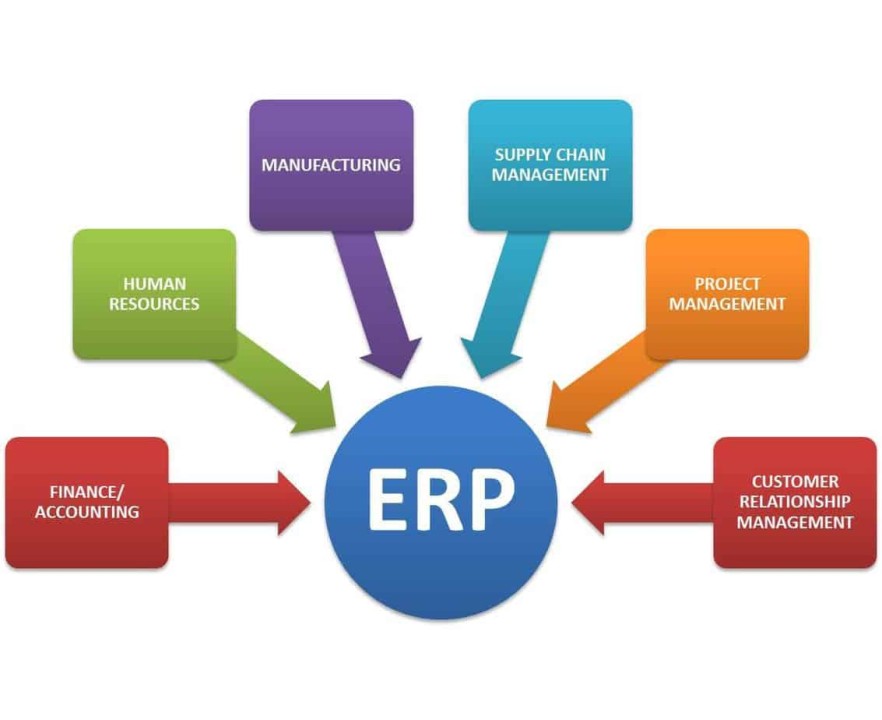
An ERP system is an integrated platform that connects various business functions such as finance, procurement, project management, human resources, and inventory management into a single unified system.
In the construction industry, ERP systems are tailored to handle:
By centralizing data and automating processes, ERP systems eliminate silos and ensure seamless communication across departments.
Before implementing ERP systems, large construction firms often struggle with the following challenges:
| Challenge | Description | Impact |
|---|---|---|
| Data Silos | Different departments use separate systems | Lack of coordination and errors |
| Manual Processes | Heavy reliance on spreadsheets and paperwork | Time-consuming and error-prone |
| Poor Visibility | Limited real-time insights into projects | Delayed decision-making |
| Resource Mismanagement | Inefficient allocation of labor and equipment | Increased costs and delays |
| Compliance Issues | Difficulty tracking regulations and documentation | Legal and financial risks |

ERP systems provide a single source of truth for all project-related data. This eliminates duplication and ensures consistency across departments.
Benefits include:
With ERP systems, project managers can create detailed schedules, allocate resources, and track progress in real time.
This helps in:
Financial control is critical for large-scale construction projects. ERP systems integrate financial data with project activities, enabling:
| Traditional Financial Management | ERP-Based Financial Management |
|---|---|
| Delayed reporting | Real-time financial insights |
| Manual reconciliation | Automated processes |
| Limited visibility | Comprehensive dashboards |
Managing suppliers and materials is a major challenge. ERP systems simplify procurement by:
This ensures timely availability of materials and reduces project delays.
Large construction projects involve hundreds or even thousands of workers. ERP systems help in:
This improves workforce utilization and reduces idle time.
Construction companies rely heavily on machinery and equipment. ERP systems provide:
This minimizes downtime and extends asset lifespan.
ERP systems help companies stay compliant with regulations by:
| Benefit | Description |
|---|---|
| Operational Efficiency | Streamlined workflows and reduced manual effort |
| Cost Control | Better budgeting and expense tracking |
| Improved Collaboration | Seamless communication across teams |
| Data-Driven Decisions | Real-time analytics and insights |
| Scalability | Supports business growth and expansion |
| Aspect | Traditional Systems | ERP Systems |
|---|---|---|
| Data Management | Fragmented | Centralized |
| Automation | Minimal | High |
| Visibility | Limited | Real-time |
| Scalability | Low | High |
| Decision-Making | Reactive | Proactive |

Large construction firms that implement ERP systems often experience significant improvements:
These results highlight the transformative power of ERP systems.
The future of ERP systems in construction is driven by emerging technologies:
Companies that adopt these innovations will stay ahead in a competitive market.
BM Coder is a leading software development company specializing in customized ERP solutions for the construction industry. Their offerings include:
With BM Coder, you get technology that aligns perfectly with your operational needs.

Ready to streamline your construction operations and improve efficiency?
Contact us now:
📧 Email: [email protected]
📱 WhatsApp: +91 9586979730
ERP systems have become essential for large construction companies looking to manage complexity, improve efficiency, and achieve consistent project success. By integrating all business processes into a single platform, ERP solutions eliminate inefficiencies, enhance visibility, and enable data-driven decision-making.
In today’s fast-paced construction environment, relying on outdated systems is no longer viable. Embracing ERP technology is the key to staying competitive, delivering projects on time, and maximizing profitability.
The future of construction belongs to companies that leverage digital transformation—and ERP systems are at the heart of that evolution.
Author: parth
