
MSME
Registered

Wedline
Registered

We Deliver
Clutch

28+ Reviews

250+ Projects
Completed

125+ Happy
Clients
MSME
Registered
Wedline
Registered
We Deliver
Clutch
28+ Reviews
250+ Projects
Completed
125+ Happy
Clients
Date: 29-04-2026
By BM Coder — Enterprise Software Development Company
Education used to be bound by four walls, a blackboard, and a fixed timetable. A teacher delivered the same lecture to 40 students, assignments were collected on paper, and results arrived weeks later. Access depended on geography, infrastructure, and income.
Today, a student in a small town in Gujarat attends a live physics class taught from Bangalore, submits homework through an app, gets instant feedback from AI, and revises with a personalized video playlist. A university professor tracks engagement in real time. A corporate employee completes compliance training on their phone between meetings. This is not a temporary shift to online classes. It is a fundamental revolution powered by EdTech software.
At BM Coder, we design and build these learning platforms for schools, universities, coaching institutes, and enterprises. While education is our focus here, our engineering approach to building secure, scalable, data intensive platforms comes from deep experience across regulated industries, including our work in agritech software development where we build solutions for farmer advisory, supply chain traceability, and precision farming that must work reliably in low connectivity environments, just like rural classrooms.
From LMS and virtual classrooms to AI tutors and assessment engines, we build production ready EdTech software.
Email: [email protected]
WhatsApp: +91 95869 79730
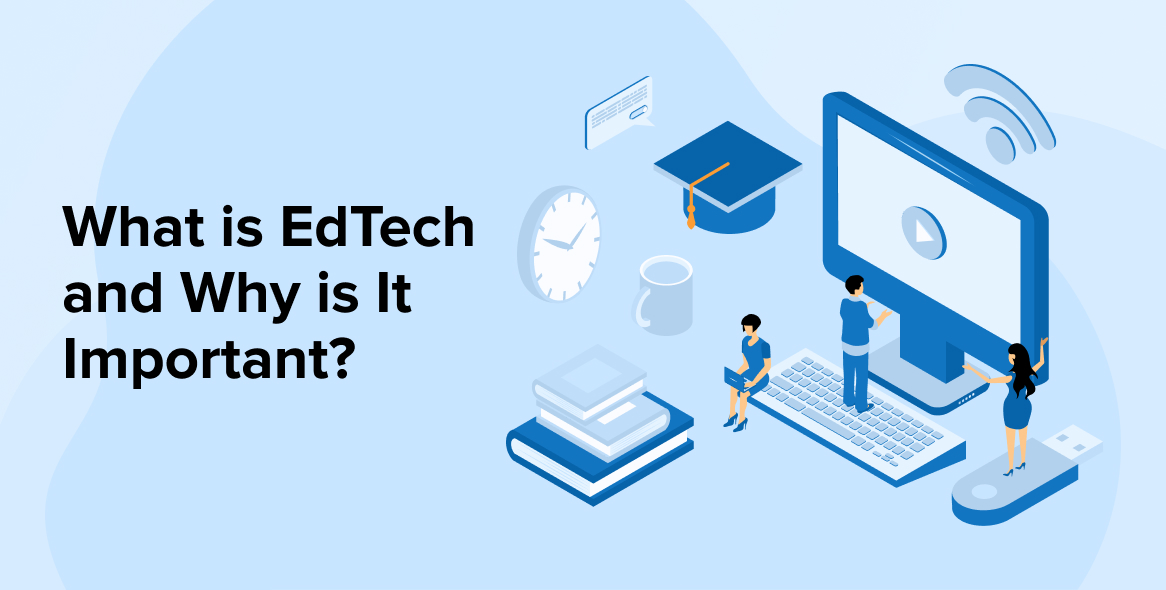
EdTech software is more than video conferencing. It is a complete digital ecosystem for teaching, learning, assessment, and administration. The modern stack includes five layers.
First, the learning experience layer. Mobile apps, web portals, and offline first apps for students. Second, the instruction layer. Live classes, studio recording, interactive whiteboards, and content authoring tools. Third, the intelligence layer. Adaptive engines, recommendation systems, and AI tutors. Fourth, the operations layer. Admissions, fee payments, attendance, timetables, and communication. Fifth, the data layer. A unified warehouse for learning analytics, outcomes, and accreditation reporting.
When these layers work together, learning becomes continuous, measurable, and personal. A platform knows that a student struggled with quadratic equations yesterday, so it serves a 3 minute micro lesson today, followed by five practice questions, and alerts the teacher if mastery does not improve.
| Dimension | Traditional System | EdTech Software System | Impact on Outcomes |
|---|---|---|---|
| Delivery | Fixed schedule, physical only | Live, recorded, hybrid, offline sync | Access increases 3x to 5x |
| Personalization | One size fits all | AI driven learning paths | 30 to 40 percent faster mastery |
| Assessment | Paper tests, delayed results | Auto graded, instant feedback | Immediate remediation |
| Teacher Role | Lecturer and grader | Coach and mentor | More time for 1 to 1 support |
| Data | Anecdotal, end of term | Real time engagement and mastery | Early intervention possible |
| Cost to Scale | Build more classrooms | Cloud infrastructure | Serve 10,000 students at marginal cost |
The biggest revolution is access. EdTech software breaks geography. A quality teacher can now reach 10,000 students simultaneously through live streaming with low latency. Recorded content with multi language subtitles makes the same lesson available in Hindi, Gujarati, Tamil, and English.
Offline first architecture is critical for Bharat. Students download lessons over WiFi at school and study at home without internet. When connectivity returns, progress syncs automatically. This pattern, which we perfected in our software development for agritech projects for farmers in remote areas, ensures learning never stops due to poor networks.
Affordability also improves. Instead of expensive physical infrastructure, institutions pay per active user. Freemium models and government partnerships bring high quality content to underserved communities. During the last three years, we have seen rural enrollment in our client platforms grow by over 200 percent.
Every student learns differently. EdTech software makes personalization practical at scale.
Adaptive engines analyze thousands of data points, time spent, hints used, mistakes made, video replays, and build a knowledge graph for each learner. If a student masters algebra quickly but struggles with geometry, the platform automatically adjusts the path. It serves more visual explanations, schedules spaced repetition, and reduces cognitive load.
AI tutors provide 24x7 doubt solving. Unlike chatbots that give generic answers, modern tutors use retrieval augmented generation over your curriculum, so responses align with your textbook and teaching style. They can solve a math problem step by step, explain a concept in simpler language, or generate a quiz on demand.
For teachers, AI acts as a co pilot. It drafts lesson plans, creates differentiated worksheets for three ability levels, and flags students at risk two weeks before exams based on engagement drops.
Video alone is passive. Modern EdTech makes learning active. Interactive simulations let students conduct virtual chemistry experiments safely. Gamification adds points, badges, and leaderboards that increase completion rates by 25 to 35 percent.
Augmented reality brings anatomy models to the kitchen table. Virtual reality labs allow engineering students to assemble engines without physical workshops. Even simple tools like live polls, breakout rooms, and collaborative whiteboards increase engagement dramatically.
Content authoring is now democratized. Teachers can create H5P interactions, record micro videos, and build assessments without developers. This speeds up curriculum updates from months to days.
| Segment | Core Software Needs | Key Features | Success Metric |
|---|---|---|---|
| K-12 Schools | LMS, virtual classroom, parent app | Attendance, homework, report cards, fee payments | Parent engagement, learning outcomes |
| Higher Education | LMS, proctoring, research portal | Credit management, plagiarism check, placements | Graduation rates, NAAC compliance |
| Coaching and Test Prep | Live classes, test engine, doubt solving | Adaptive practice, leaderboards, analytics | Selection ratio, retention |
| Corporate L and D | LXP, skill assessments, certifications | SCORM, xAPI, skill gap analysis | Time to competency, compliance |
| Skilling and Vocational | Mobile first, offline, vernacular | Video based, job matching, certificates | Placement rate |
Assessment has moved from memory based exams to continuous, competency based evaluation. EdTech platforms support multiple formats, MCQs with automated grading, coding assessments with test cases, subjective answers with AI assisted evaluation, and viva via recorded video.
Remote proctoring uses AI to monitor eye movement, tab switching, and background noise, with human review for flagged cases. This maintains integrity while allowing scale.
Credentials are becoming digital and verifiable. Blockchain based certificates and digital wallets allow students to share proof of skills with employers instantly. Micro credentials and stackable certificates support lifelong learning.
Every click generates data. Modern EdTech software turns this into insight. Learning analytics dashboards show heatmaps of where students struggle, predict dropouts, and recommend interventions.
Institutional analytics connect learning data to operations. Which courses have the highest cost per outcome. Which teachers drive the best engagement. Which marketing channel brings the most committed learners.
For regulators and accreditation bodies, automated reporting replaces manual data collection. Platforms generate reports for UGC, AICTE, or NAAC directly from the data warehouse, saving months of effort.
Great learning experiences need robust engineering. We build EdTech platforms on microservices, with separate services for identity, content, live classes, assessments, payments, and analytics.
Video delivery uses adaptive bitrate streaming via CDN, with WebRTC for low latency live classes. For scale, we use SFU architecture that supports 10,000 concurrent viewers in a single session.
Offline sync uses SQLite on device and background sync workers. Data models are designed for eventual consistency. The assessment engine is isolated to prevent cheating and ensure fairness under load.
Interoperability is key. We implement LTI 1.3, SCORM, xAPI, and OneRoster so your platform connects to existing tools like Zoom, Google Classroom, or Moodle.
| Level | Capabilities | Limitations | Next Investment |
|---|---|---|---|
| 1. Digital Content | PDFs and recorded videos on website | No tracking, no engagement | LMS with progress tracking |
| 2. Managed Learning | LMS, assignments, basic analytics | One size fits all | Live classes, mobile app |
| 3. Personalized | Adaptive paths, AI recommendations | Data silos | Unified data warehouse |
| 4. Intelligent Platform | AI tutor, predictive analytics, automation | Complex operations | Low code admin tools |
Education data is sensitive. We build with privacy by design. All data is encrypted in transit and at rest. Role based access ensures teachers see only their classes. Parents see only their children.
For India, we align with DPDP Act requirements for consent and data minimization. For global deployments, we support FERPA, COPPA, and GDPR. Student data is never used to train public models without explicit consent.
Proctoring and monitoring features include clear consent flows and data retention policies. We provide audit logs for every grade change and content access, essential for accreditation.
Technology alone does not transform learning. The biggest challenges are change management, teacher training, and content quality. We address this with phased rollouts, train the trainer programs, and in app guidance.
Connectivity remains a barrier. Our offline first apps and lightweight video compression solve this. Device diversity is handled through progressive web apps that work on low end Android phones.
Engagement drops after initial excitement. We counter this with nudges, WhatsApp reminders, parent notifications, and gamified streaks. Platforms that implement these see 40 percent higher course completion.
We follow a product engineering approach, not just coding. Discovery starts with learning design workshops. We map personas, journeys, and outcomes. Then we architect for scale from day one.
Our typical stack includes React Native for mobile, Next.js for web, Node.js or Go for APIs, PostgreSQL for transactional data, ClickHouse for analytics, and Kafka for events. Live classes run on mediasoup or Janus. AI components use open source LLMs fine tuned on your curriculum.
We deliver in sprints. MVP in 10 to 12 weeks with core LMS, live classes, and payments. Then we add adaptive learning, analytics, and AI tutor. We provide complete DevOps, security audits, and ongoing product management.
This disciplined approach, honed across sectors from fintech to our agritech platform builds, ensures your EdTech product is reliable during peak exam traffic and secure for student data.
The next five years will bring three major shifts. First, AI native learning. Every student will have a personal tutor that knows their strengths, speaks their language, and adapts in real time. Teachers will orchestrate fleets of AI agents.
Second, skills based learning and employment linkage. Platforms will directly connect learning outcomes to jobs through skill wallets and employer APIs. Assessments will be performance based, not just tests.
Third, immersive and spatial learning. AR glasses and affordable VR will make labs and field trips accessible to every school. Learning will move from screens to spaces.
EdTech software is revolutionizing education by making learning accessible, personalized, engaging, and measurable. It empowers teachers, delights students, and gives institutions the data to continuously improve. The revolution is not about replacing teachers. It is about amplifying their impact with technology.
Organizations that invest in the right platform architecture today will lead the next decade of education. BM Coder is ready to be your engineering partner in that journey.
Let's build your EdTech platform. Get a free product workshop and technical architecture plan from BM Coder.
Email: [email protected]
WhatsApp: +91 95869 79730
Author: parth
