
MSME
Registered

Wedline
Registered

We Deliver
Clutch

28+ Reviews

250+ Projects
Completed

125+ Happy
Clients
MSME
Registered
Wedline
Registered
We Deliver
Clutch
28+ Reviews
250+ Projects
Completed
125+ Happy
Clients
Date: 08-05-2026
The future of work is not a distant concept. It is already here, reshaping job roles every 12 to 18 months as AI, automation, green technologies, and digital services change what employers need. The challenge for individuals, educators, and governments is not access to information. It is access to the right skills, validated in ways employers trust, and connected directly to opportunity.
Traditional education was designed for stability. Degrees took years, curricula changed slowly, and hiring relied on pedigree and proxies. That model breaks down when skills have a half life of less than five years. Workers need continuous, modular, job aligned learning that fits around life and work. Employers need verified competency signals, not just certificates. This is where digital skill development platforms step in.
These platforms combine personalized learning, hands on practice, credible assessment, and direct pathways to jobs. At BM Coder, a software development company building workforce technology for enterprises, governments, and skilling organizations, we see this convergence daily. Our work in employment matching platform development shows that when skill development is linked to live labor market data and hiring workflows, learners move faster from learning to earning, and employers hire with confidence.
A digital skill development platform is more than a collection of video courses. It is an end to end system that helps a person discover a career path, acquire relevant skills, prove competency, and get matched to suitable roles.
Core functions include career discovery based on aptitude and market demand, modular learning paths aligned to job roles, interactive labs and simulations for practice, AI assisted coaching and feedback, proctored assessments with rubrics, digital credentials and skill wallets, and direct integration with employers for interviews and offers. The platform also tracks outcomes like placement, retention, and wage progression to continuously improve content and matching.

Three forces are converging. First, skill obsolescence is accelerating. Roles in customer support, data entry, and even software testing are being reshaped by AI copilots. Workers need to reskill while working. Second, hiring is shifting to skills based evaluation. Employers care less about where you studied and more about what you can do on day one. Third, work is becoming more distributed and project based. People need portable, verifiable credentials that travel across platforms and borders.
Digital platforms address these forces by offering bite sized, stackable learning, practice in realistic environments, and credentials that employers can verify instantly. They also lower barriers of cost, geography, and time, making high quality skilling accessible to learners in Tier 2 and Tier 3 cities, women returning to work, and frontline workers seeking upward mobility.
Content is abundant. Competency is scarce. Empowering the workforce means moving from watch and quiz to do and prove.
Modern platforms use performance based assessments. A digital marketing learner builds and optimizes a live campaign with a budget cap. A data analyst cleans a messy dataset and builds a dashboard with defined KPIs. A field technician completes a wiring simulation with safety checks. Each task is scored against a rubric, producing a skill profile that maps to job requirements.
This shift creates trust. Employers can shortlist based on demonstrated ability, reducing time to hire and early attrition. Learners gain confidence because they have practiced the work, not just read about it.
| Capability | What It Enables | Learner Benefit | Employer Benefit |
|---|---|---|---|
| Career Pathfinder | Maps interests and aptitude to in demand roles | Clear, personalized roadmap | Better fit candidates |
| Modular Learning Paths | Stackable micro credentials aligned to jobs | Learn while earning | Faster onboarding |
| Hands On Labs | Simulations and real tools in browser | Job ready practice | Lower training cost |
| AI Coach | Instant feedback on code, writing, speech | Personalized support at scale | Consistent quality |
| Verified Skill Wallet | Portable credentials with evidence | Proof that travels | Trusted hiring signals |
| Job Matching | Algorithmic fit to live roles | Relevant opportunities | Higher interview to offer |

Youth entering work: Platforms provide guided pathways from foundational digital literacy to job specific skills, with internships and apprenticeships built in. Mentorship features connect learners to industry professionals for portfolio reviews.
Frontline workers upskilling: Mobile first microlearning fits around shifts. Just in time modules teach new POS systems, safety protocols, or customer handling techniques. Badges recognize on the job learning.
Women returning to work: Flexible schedules, remote practice labs, and returnship programs with employers reduce re entry friction. Childcare friendly cohorts and community support improve completion.
Mid career professionals: Career transition paths combine skill gap analysis, targeted upskilling, and project based proof of work. AI copilots accelerate learning of new tools.
Empowerment requires relevance. Platforms continuously ingest labor market data to understand which skills are rising and which are declining. They map course outcomes to job descriptions, identify skill gaps, and recommend next best learning actions.
For example, if employer demand for prompt engineering and data cleaning in Python rises in a region, the platform surfaces a short pathway, updates assessments, and notifies learners with adjacent skills. This dynamic alignment keeps the workforce future ready.
A scalable platform rests on four layers. Identity and access ensure secure, role based experiences for learners, coaches, employers, and admins. The learning layer delivers content, labs, and assessments with offline support for low bandwidth. The skills layer maintains taxonomies, rubrics, and credential issuance. The employment layer handles job ingestion, matching, interview workflows, and outcome tracking.
Data flows across layers to create a unified learner record. Every interaction generates signals that personalize recommendations and improve matching. Privacy by design ensures consent, data minimization, and the ability to export or delete data.
| Metric | Definition | Why It Matters | Good Target |
|---|---|---|---|
| Skill Gain | Pre to post assessment improvement | Measures real learning | 30 percent plus lift |
| Time to Job Ready | Weeks to reach proficiency threshold | Speed to opportunity | 8 to 12 weeks for entry roles |
| Interview Rate | Interviews per 10 applications | Relevance of matching | 4 plus |
| Placement Rate | Offers divided by job ready learners | Outcome focus | 65 percent plus |
| 90 Day Retention | Still employed after 90 days | Quality of fit | 75 percent plus |
| Wage Uplift | Post training salary vs baseline | Economic mobility | 25 percent plus |
Mobile first and low bandwidth friendly. Most future workers will learn on phones. Offline sync, compressed video, and text light interfaces are essential. Multilingual content with local examples increases comprehension and completion.
Practice over passive watching. Aim for at least 60 percent active learning time through labs, projects, and peer reviews. Provide immediate, actionable feedback, not just scores.
Human support at key moments. AI coaches handle routine help, but live mentors matter for motivation, career guidance, and mock interviews. Build community cohorts to reduce dropout.
Employer co design. Involve hiring managers in defining assessments and capstones. Their participation increases trust and hiring rates.
Retail and BFSI frontline: Platforms deliver micro modules on POS systems, KYC processes, and customer handling, followed by simulated role plays scored on tone and resolution. Placement teams see verified communication scores, leading to higher first month performance.
Digital and AI adjacent roles: Learners complete browser based labs for data cleaning, dashboard building, and prompt based automation. Portfolios are auto generated from project artifacts, giving employers tangible proof.
Green jobs: Solar installation and EV servicing pathways combine video, AR checklists, and in person practicals logged via mobile. Safety compliance is tracked and must pass before certification.
Healthcare support: Infection control, patient communication, and vitals measurement are practiced through simulations and assessed with checklists, improving readiness for hospital onboarding.
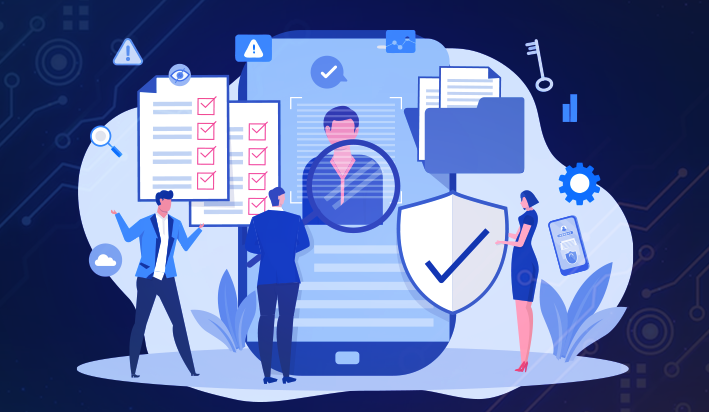
For platforms to empower at scale, trust is non negotiable. Implement secure identity, proctored assessments, and plagiarism detection. Issue verifiable credentials using open standards so learners own their achievements. Maintain transparent audit trails for assessments and placement outcomes.
Align skill taxonomies to national frameworks and industry standards to ensure portability. Provide APIs for background verification and for employers to ingest skill data directly into their ATS.
Content dumping without practice. Learners disengage and employers do not trust certificates. Ignoring placement workflows. Learning without hiring integration leaves value on the table. One size fits all UX. Different segments need different journeys. Weak data governance. Without clean data, personalization and matching fail.
BM Coder builds digital skill development platforms that are engineered for outcomes. We combine learning science, robust engineering, and employer workflows into one system. Our teams have delivered mobile first learning apps, secure assessment engines, skill wallets, and matching marketplaces that handle high volume hiring.
We focus on speed to value. Start with a focused set of roles and employers, prove placement lift, then expand. Our architecture supports multilingual content, offline sync, and integrations with payment gateways, identity providers, and HR systems.
Let's design your digital skilling and employment platform.
Email: [email protected]
WhatsApp: +91.9586979730
The future workforce will learn continuously, in short bursts, with AI as a copilot. Credentials will be granular, verifiable, and portable. Hiring will be skills first, with work samples carrying more weight than degrees. Platforms that connect learning, assessment, and employment in one loop will become essential infrastructure, much like payment networks today.
Organizations that invest now will build a talent advantage. They will reskill faster, hire better, and retain longer. More importantly, they will expand opportunity to millions who have talent but lack traditional signals.
Digital skill development platforms empower the future workforce by making learning relevant, practice realistic, assessment trustworthy, and jobs accessible. They turn ambition into capability and capability into livelihoods. The technology exists. The need is urgent. The next step is execution with a clear focus on outcomes.
If you are ready to build a platform that moves people from learning to earning, BM Coder can help you design the architecture, create engaging learning experiences, and connect directly to employers. Together we can build a system where skills lead reliably to opportunity.
Author: parth
