
MSME
Registered

Wedline
Registered

We Deliver
Clutch

28+ Reviews

250+ Projects
Completed

125+ Happy
Clients
MSME
Registered
Wedline
Registered
We Deliver
Clutch
28+ Reviews
250+ Projects
Completed
125+ Happy
Clients
Date: 30-04-2026
By BM Coder — Enterprise Software Development Company
Software delivery used to be an event. Teams would work for three months, merge everything at the last minute, test frantically for two weeks, then deploy on a Saturday night with everyone on call. The release would often fail, rollbacks would take hours, and customers would experience downtime on Monday morning.
This model does not work in 2026. Users expect new features weekly, not quarterly. Competitors ship daily. Downtime costs thousands per minute. Security vulnerabilities must be patched in hours, not months.
DevOps and CI/CD change the game completely. DevOps breaks down the wall between development and operations. CI/CD automates the path from code commit to production. Together, they turn software delivery from a risky event into a routine, reliable process. At BM Coder, we implement these practices for startups and enterprises, and we always start with solid foundations. The most successful DevOps transformations begin with well designed systems, which is why our work is closely aligned with our software architecture design services that ensure applications are built for automation, observability, and resilience from day one.
We build CI/CD pipelines, automate infrastructure, and implement DevOps culture to ship faster with confidence.
Email: [email protected]
WhatsApp: +91 95869 79730
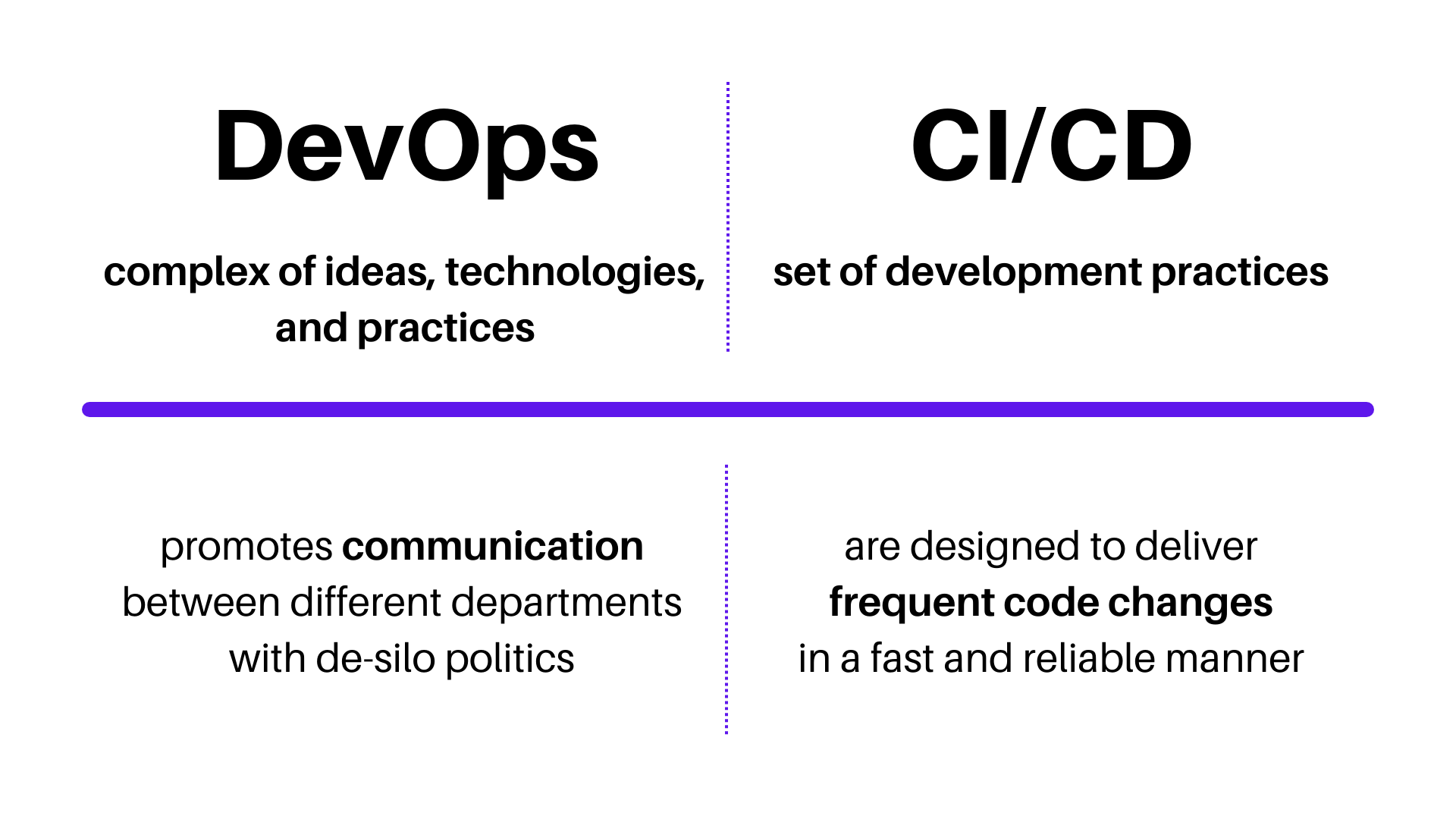
DevOps is a culture and practice that combines software development and IT operations. The goal is to shorten the development lifecycle while delivering features, fixes, and updates frequently in close alignment with business objectives.
CI/CD is the technical engine of DevOps. CI, or Continuous Integration, means developers merge code into a shared repository frequently, where automated builds and tests run. CD can mean Continuous Delivery, where code is always ready to deploy, or Continuous Deployment, where every passing change goes to production automatically.
Together, they create a fast feedback loop. A developer commits code in the morning, tests run in minutes, and the feature can be live by afternoon, safely.
| Metric | Traditional Model | DevOps with CI/CD | Impact |
|---|---|---|---|
| Release Frequency | Quarterly or monthly | Daily or multiple per day | Faster time to market |
| Lead Time | Weeks to months | Hours to days | Respond to market quickly |
| Deployment Time | 4 to 8 hours, manual | 5 to 15 minutes, automated | Less overtime, less risk |
| Change Failure Rate | 30 to 50 percent | 5 to 15 percent | Fewer outages |
| MTTR | Hours to days | Minutes to under 1 hour | Reduced downtime cost |
| Rollback | Manual, risky | One click, automated | Confidence to ship |
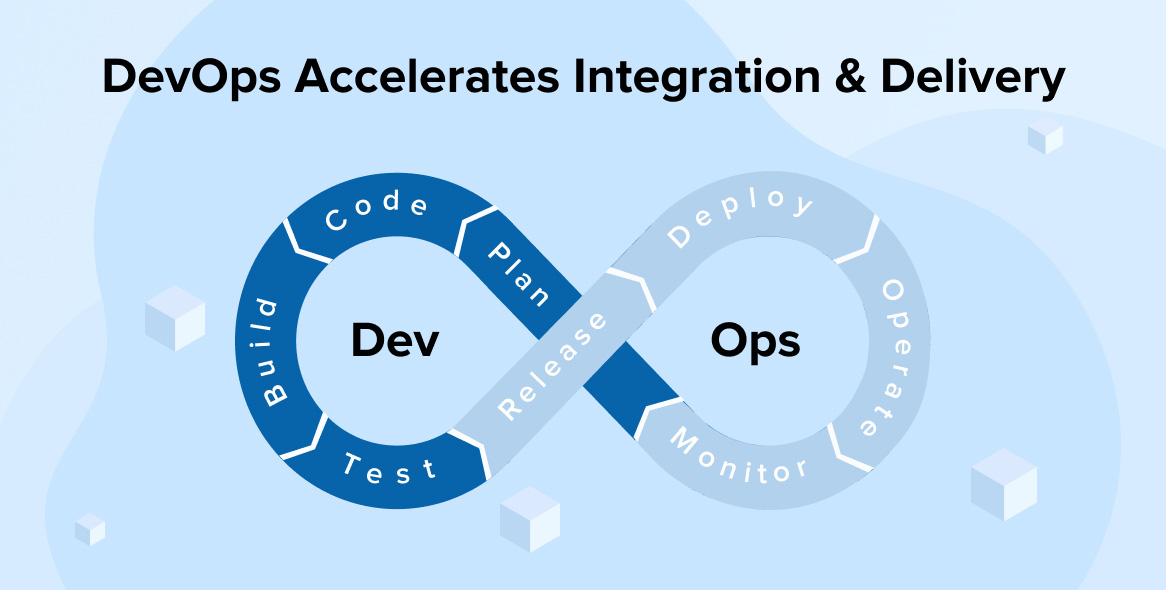
Acceleration comes from removing manual handoffs and waiting time. In traditional teams, code waits for QA, then waits for ops, then waits for a maintenance window. DevOps eliminates these queues.
1. Automation of Everything: Builds, tests, security scans, infrastructure provisioning, and deployments are automated. A pipeline runs on every commit. What took a day now takes 12 minutes. Developers get immediate feedback if tests fail.
2. Small Batches: Instead of large releases, teams ship small changes frequently. Small changes are easier to test, review, and roll back. This is why high performing teams deploy 200 times more frequently than low performers.
3. Shared Ownership: Developers own code in production. They build monitoring and alerts into their services. This creates quality built in, not inspected in later. Operations teams become platform engineers who provide self service tools.
4. Infrastructure as Code: Servers are not configured manually. Terraform or Pulumi defines infrastructure in code, versioned in Git. A new environment is created in minutes, identical to production. This removes environment drift, a major cause of delays.
Downtime is reduced not by trying harder during deployments, but by designing safety into the process.
Automated Testing: Every change runs unit tests, integration tests, API contract tests, and security scans. Bugs are caught before production. One client reduced production incidents by 68 percent after implementing pipeline gates.
Progressive Delivery: Instead of releasing to 100 percent of users, CI/CD enables canary releases, 5 percent of traffic gets new version first. Blue green deployments keep old version running until new is healthy. Feature flags allow turning off a feature instantly without redeploying.
Fast Rollback: If monitoring detects increased error rates, pipelines automatically roll back to previous version in under 2 minutes. This is possible because deployments are automated and versioned.
Observability: CI/CD pipelines integrate monitoring. Every deployment is tagged in dashboards. Teams can correlate a spike in latency directly to a specific commit and revert quickly.
| Stage | Actions | Tools | Purpose |
|---|---|---|---|
| Source | Code commit, pull request | GitHub, GitLab, Bitbucket | Trigger pipeline |
| Build | Compile, containerize | Docker, Maven, Gradle | Create immutable artifact |
| Test | Unit, integration, SAST | JUnit, SonarQube, Trivy | Catch defects early |
| Package | Push image to registry | ECR, Docker Hub, Harbor | Versioned artifact |
| Deploy Staging | Automated deploy | ArgoCD, Flux, Helm | Validate in prod like env |
| Test E2E | Smoke, performance tests | Cypress, k6, Postman | Ensure quality |
| Deploy Production | Canary or blue green | Spinnaker, Argo Rollouts | Zero downtime release |
| Observe | Monitor metrics | Prometheus, Datadog | Verify and alert |

Trunk Based Development: Developers commit to main branch daily, avoiding long lived feature branches that cause merge hell. Feature flags hide incomplete work.
Shift Left Security: Security scans run in pipeline, not after release. Container images are scanned for vulnerabilities. Secrets are managed in Vault, not in code.
GitOps: Git is the single source of truth for both application and infrastructure. ArgoCD watches Git and syncs clusters automatically. Rollback is just a Git revert.
ChatOps: Deployments are triggered from Slack or Teams with full audit logs. This improves collaboration and visibility.
High performing DevOps teams track four key metrics. Deployment Frequency, how often you deploy. Lead Time for Changes, time from commit to production. Change Failure Rate, percentage of deployments causing failure. Mean Time to Restore, how fast you recover.
Elite performers deploy multiple times per day, have lead time under one hour, change failure rate under 15 percent, and MTTR under one hour. These metrics directly correlate with business performance and profitability.
| Level | Characteristics | Challenges | Next Steps |
|---|---|---|---|
| 1. Manual | Manual builds and deploys | Slow, error prone | Automate build and test |
| 2. CI | Automated builds on commit | Deployment still manual | Automate deployment to staging |
| 3. Continuous Delivery | One click deploy to prod | Manual approval gates | Add canary and monitoring |
| 4. Continuous Deployment | Auto deploy to prod | Requires high test confidence | Implement GitOps and chaos |
| 5. Elite | Self service platform | Platform maintenance | Optimize cost and security |
CI/CD works best with architectures designed for it. Monoliths with long startup times and shared databases are hard to deploy safely. Microservices, serverless functions, and twelve factor apps enable independent deployments.
This is why our DevOps implementations always start with architecture review. Our software architecture design services ensure services are loosely coupled, stateless, and observable, making automation effective rather than painful.
Consider a typical deployment. With traditional methods, you stop the server, deploy new code, start server, hope it works. This causes 5 to 30 minutes downtime.
With CI/CD and Kubernetes, you use rolling updates. New pods start, health checks pass, traffic shifts gradually, old pods terminate. Users experience zero downtime. If error rate increases, automatic rollback triggers in 90 seconds.
Database changes use expand and contract pattern. Add new column, deploy code that writes to both, backfill data, then remove old column in next release. This avoids locking tables during peak hours.
Speed without security is dangerous. Modern pipelines include DevSecOps. Every build runs SAST for code vulnerabilities, SCA for open source licenses, container scanning, and secrets detection.
Compliance is automated. Policies as code ensure only approved images deploy to production. Audit logs capture who deployed what when. This satisfies SOC 2 and ISO requirements without manual paperwork.
We follow a pragmatic approach. First, assess current state using DORA metrics and value stream mapping. Identify biggest bottlenecks, usually manual testing or environment provisioning.
Second, build the foundation, Git repository strategy, container registry, Kubernetes cluster, and observability stack. We implement CI/CD using GitHub Actions or GitLab CI integrated with ArgoCD for GitOps.
Third, automate the golden path. We create templates so any new service gets pipeline, monitoring, and security scanning automatically. Developers focus on code, not YAML.
Fourth, we train teams on trunk based development, feature flags, and incident response. DevOps is 50 percent culture, we run workshops to build shared ownership.
Results are typical, deployment frequency increases from monthly to daily within 90 days, lead time drops from weeks to hours, and downtime reduces by over 70 percent.
Automating bad process just makes bad faster. Fix process first. Do not skip testing automation, CI/CD without tests increases risk. Avoid tool sprawl, choose integrated toolchain. Most importantly, do not treat DevOps as just a tools team, it requires cultural change and leadership support.
Platform engineering is the next evolution. Internal developer platforms provide self service for developers to provision environments and deploy without DevOps tickets. AI is being used to predict build failures, optimize test suites, and auto remediate incidents. Progressive delivery will become standard with automated analysis of business metrics, not just technical metrics.
DevOps and CI/CD accelerate software delivery by automating manual work, enabling small frequent changes, and providing fast feedback. They reduce downtime by building quality in, enabling safe progressive deployments, and providing instant rollback.
Organizations that adopt these practices ship faster, recover quicker, and deliver better customer experiences. The investment pays back in weeks through reduced incidents and increased productivity.
BM Coder helps you implement DevOps the right way, with automation, architecture, and cultural enablement.
Contact BM Coder for a free DevOps maturity assessment and CI/CD pipeline design session.
Email: [email protected]
WhatsApp: +91 95869 79730
Author: parth
