
MSME
Registered

Wedline
Registered

We Deliver
Clutch

28+ Reviews

250+ Projects
Completed

125+ Happy
Clients
MSME
Registered
Wedline
Registered
We Deliver
Clutch
28+ Reviews
250+ Projects
Completed
125+ Happy
Clients
Date: 01-05-2026
By BM Coder — Enterprise Software Development Company
Building software used to be about features and speed. Today, it is about trust and compliance. A fintech startup cannot launch in Europe without GDPR. A healthtech platform cannot serve US hospitals without HIPAA. An Indian SaaS company handling personal data must comply with the DPDP Act 2023. A single data breach can cost millions in fines, lawsuits, and lost customers.
Many businesses learn this too late. They build their product, acquire customers, then face an enterprise deal that requires SOC 2 Type II certification. The audit reveals missing audit logs, no encryption at rest, and no data retention policy. The deal stalls for nine months while engineering rebuilds core systems.
Compliance-ready software prevents this. It means building security, privacy, and auditability into the architecture from day one, not bolting them on later. At BM Coder, we specialize in this approach for regulated industries. Our foundation is always secure engineering, which is why every compliance project starts with robust data protection and IP security practices to safeguard customer data, intellectual property, and business continuity across global markets.
We develop GDPR, HIPAA, SOC 2, and DPDP compliant platforms with security by design.
Email: [email protected]
WhatsApp: +91 95869 79730
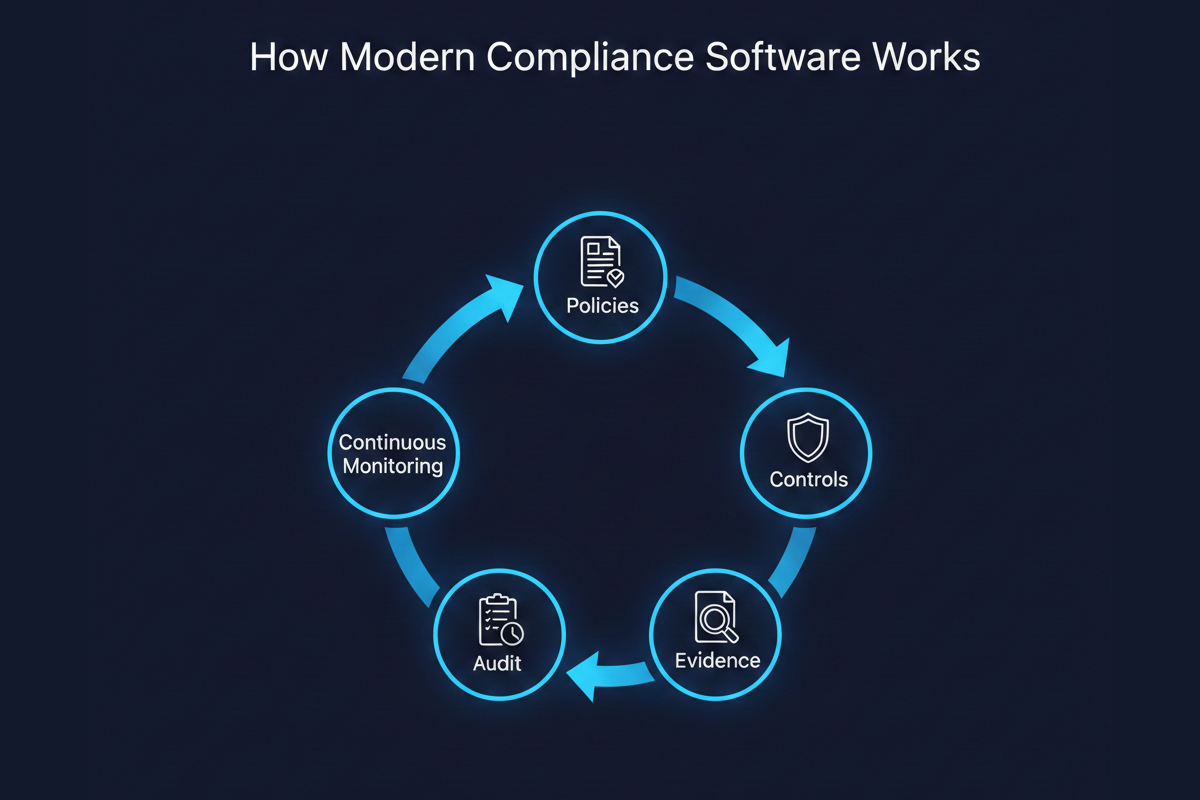
Compliance-ready software is designed to meet regulatory requirements by default. It includes technical controls, process automation, and evidence generation needed for audits.
Key capabilities include data encryption, access controls, audit logging, consent management, data residency, retention policies, breach notification workflows, and privacy by design. It is not a checkbox, it is an architectural approach.
Instead of scrambling before an audit, you generate compliance reports from your system automatically. Instead of manual data deletion requests, users can exercise their rights through self service portals.
| Regulation | Region | Key Requirements | Software Implications |
|---|---|---|---|
| GDPR | EU | Consent, right to erasure, data portability | Consent manager, deletion workflows |
| DPDP Act 2023 | India | Consent, data localization, breach reporting | India data residency, notice management |
| HIPAA | USA | PHI protection, audit controls | Encryption, access logs, BAAs |
| SOC 2 Type II | Global | Security, availability, confidentiality | Monitoring, change management, evidence |
| PCI DSS | Global | Card data protection | Tokenization, network segmentation |
| ISO 27001 | Global | ISMS framework | Risk management, policies as code |
Retrofitting compliance is 10 times more expensive than building it in. Adding encryption to a live database requires downtime and migration risk. Implementing audit logs after launch means you have no historical evidence. Building consent management later requires rewriting user flows.
Compliance-ready architecture avoids this. Data is classified at ingestion. PII is encrypted or tokenized automatically. Every data access is logged immutably. Consent is captured granularly. These decisions made early save months of rework.
Moreover, enterprise buyers now demand compliance upfront. Without SOC 2 or ISO 27001, you cannot sell to Fortune 500 companies. Without GDPR, you cannot serve EU users legally.

1. Identity and Access Management: Strong authentication with MFA, role based access control, and principle of least privilege. Every action is tied to a user identity.
2. Data Protection: Encryption in transit with TLS 1.3, encryption at rest with customer managed keys. Field level encryption for sensitive fields like PAN or health data. Tokenization replaces sensitive data with tokens in non production environments.
3. Audit Logging: Immutable logs of who accessed what data when, from where, and why. Logs are tamper proof, stored separately, and retained per policy. This is essential for HIPAA and SOC 2.
4. Consent and Privacy Management: Granular consent capture, versioned privacy notices, and automated workflows for data subject rights, access, correction, deletion, and portability.
5. Data Residency and Sovereignty: Ability to store data in specific geographic regions. For India DPDP and EU GDPR, this is mandatory for certain data categories.
Our data protection and IP security framework implements all these controls as reusable platform services.
| Layer | Controls | Implementation | Audit Evidence |
|---|---|---|---|
| Application | Input validation, RBAC | Secure coding, OWASP | SAST reports, pen test |
| Data | Encryption, masking | KMS, tokenization | Key rotation logs |
| Infrastructure | Network segmentation | VPC, firewalls, WAF | Network diagrams |
| CI/CD | Secure pipeline | SAST, SCA, image scan | Pipeline logs |
| Operations | Monitoring, incident response | SIEM, runbooks | Incident reports |
| Governance | Policies, training | Policy as code | Attestation records |
When software is built compliant by design, entering new markets becomes faster. You do not rebuild for each regulation, you configure.
For GDPR, you enable consent banners and data export APIs. For DPDP, you switch data residency to India region. For HIPAA, you enable audit log retention to 6 years and sign BAAs. The core platform remains same.
This configurability is architectural. Data classification tags drive policies automatically. A field tagged as PHI gets encrypted, logged, and retained per HIPAA rules without developer intervention.

GDPR mandates privacy by design. This means minimizing data collection, purpose limitation, and default privacy settings.
Compliance-ready software implements this through data minimization APIs that reject unnecessary fields, purpose based access where services can only access data for stated purpose, and automatic data purging after retention period.
For example, a marketing service cannot access health data even if it is in same database, because architecture enforces purpose based access at API gateway level.
The hardest part of audits is evidence collection. Traditional approach involves screenshots and spreadsheets. Compliance-ready software generates evidence continuously.
Infrastructure as code provides proof of secure configuration. CI/CD pipelines log every deployment with approver identity. Monitoring systems record uptime and incident response times. Access logs show who accessed production data.
For SOC 2, we implement automated evidence collection that exports controls status daily to auditor dashboards. Audit preparation time drops from 3 months to 2 weeks.
| Category | Must Have Features | Why It Matters |
|---|---|---|
| Security | MFA, SSO, RBAC, encryption | Prevents breaches, meets all regs |
| Privacy | Consent manager, DSR portal | GDPR, DPDP compliance |
| Audit | Immutable logs, tamper proof | HIPAA, SOC 2 evidence |
| Data Governance | Classification, retention, deletion | Right to erasure |
| Resilience | Backups, DR, RTO/RPO | Business continuity |
| DevSecOps | SAST, DAST, dependency scan | Secure SDLC |

Healthcare: HIPAA requires audit controls, transmission security, and business associate agreements. Software must log every PHI access and support patient right of access within 30 days.
Fintech: PCI DSS requires card data never stored, or tokenized. RBI guidelines require data localization and audit trails. SOC 2 is mandatory for enterprise sales.
SaaS: GDPR and DPDP require data processing agreements, sub processor management, and cross border transfer mechanisms.
EdTech: COPPA and FERPA require parental consent and student data protection.
Compliance-ready software integrates controls into each phase. During design, threat modeling and privacy impact assessments. During development, secure coding standards and automated scans. During testing, penetration testing and compliance validation. During deployment, change management approvals logged. During operations, continuous monitoring and incident response.
This DevSecOps approach ensures compliance is continuous, not annual.
We start with compliance mapping workshop. Which regulations apply to you now and in next 24 months. We create a controls matrix mapping requirements to technical implementations.
We then build a compliance platform layer, identity service with MFA, audit logging service with immutability, consent management service, data encryption service with KMS integration, and policy engine.
Application teams consume these as APIs, ensuring consistency. We implement infrastructure as code with CIS benchmarks, automated backups, and disaster recovery.
We prepare audit packages, architecture diagrams, policies, evidence exports, and penetration test reports. Our clients typically achieve SOC 2 Type I in 8 to 12 weeks and GDPR readiness in same timeframe.
GDPR fines can reach 4 percent of global revenue. HIPAA fines average $1.5M per incident. Beyond fines, there is reputational damage and lost deals. Investing 10 to 15 percent extra in building compliance-ready architecture upfront avoids 300 percent rework cost later and unlocks enterprise revenue.

Regulations are increasing, not decreasing. AI Act in EU, state privacy laws in US, Digital India Act coming. Compliance-ready software will need automated compliance monitoring, AI driven risk assessment, and real time data mapping.
Platforms that treat compliance as code will win. Those that treat it as paperwork will struggle to scale globally.
Compliance-ready software helps businesses meet global regulations by embedding security, privacy, and auditability into architecture. It reduces risk, accelerates market entry, and builds customer trust.
It is not about checking boxes for auditors. It is about building systems that respect user data, withstand scrutiny, and scale across borders.
BM Coder helps you build these platforms the right way, from day one.
Schedule a compliance readiness assessment. We will map your regulatory requirements to a technical roadmap.
Email: [email protected]
WhatsApp: +91 95869 79730
Author: parth
