
MSME
Registered

Wedline
Registered

We Deliver
Clutch

28+ Reviews

250+ Projects
Completed

125+ Happy
Clients
MSME
Registered
Wedline
Registered
We Deliver
Clutch
28+ Reviews
250+ Projects
Completed
125+ Happy
Clients
Date: 29-04-2026
By BM Coder — Enterprise Software Development Company
Agriculture feeds the world, yet for centuries it has depended on intuition, manual labor, and unpredictable weather. A farmer would walk the field, look at the leaves, guess the water need, and hope for a good monsoon. Decisions about fertilizer, pest control, and harvest timing were based on experience passed down through generations, not on real time data.
That model is changing fast. Today, a farmer in Maharashtra checks soil moisture on his phone, receives an alert in Marathi to spray for early blight, and sells his tomatoes directly to a retailer through an app, with payment settled the same day. A large farm in Punjab uses drones to map crop health, variable rate sprayers to apply exactly the right amount of chemical, and AI models to predict yield three weeks before harvest.
This transformation is powered by agritech software. At BM Coder, we build these platforms for agribusinesses, FPOs, input companies, and startups. Our engineering DNA comes from building mission critical software for complex operations, including our work in manufacturing software development where we design systems for production planning, quality control, and supply chain traceability. We bring the same rigor in data integrity, offline reliability, and process automation to farming.
From farm management and precision agriculture to market linkages and traceability, we develop scalable agritech software.
Email: [email protected]
WhatsApp: +91 95869 79730
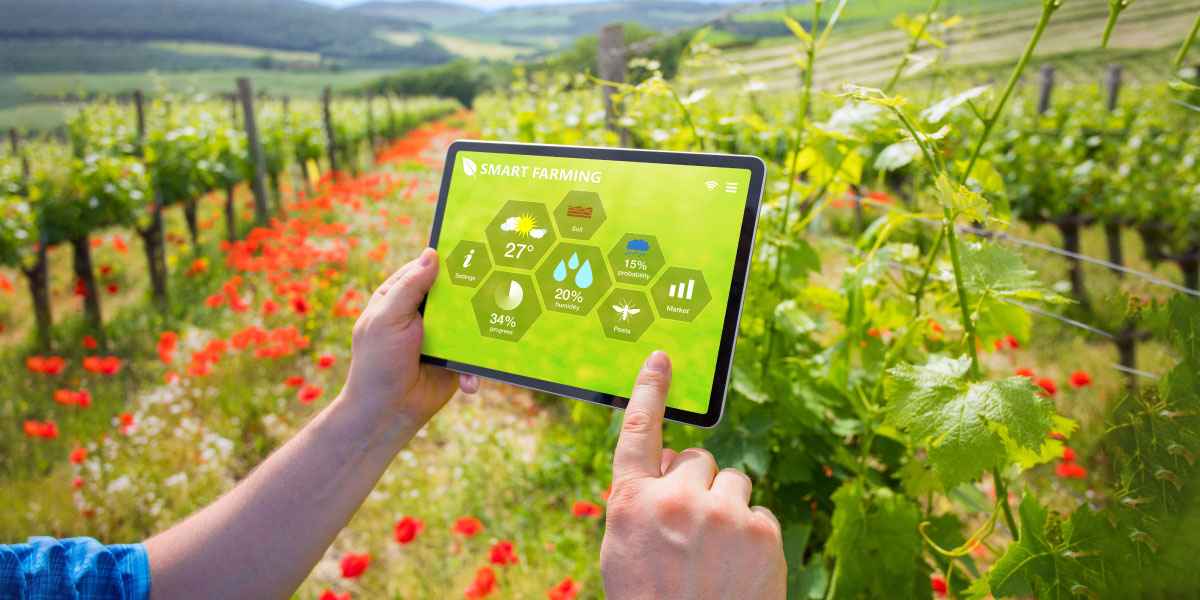
Agritech software is not a single app. It is a connected system that digitizes the entire crop lifecycle. It combines mobile apps for farmers, IoT sensors in the field, satellite imagery, weather data, AI models, and market platforms into one workflow.
The core functions are simple but powerful. Capture data from the field automatically. Turn that data into actionable advice. Execute the action, whether irrigation, spraying, or harvesting. Track the outcome. Learn and improve for the next season.
This creates a closed loop. Instead of guessing, a farmer knows exactly when to irrigate based on soil moisture at 15 cm depth. Instead of blanket spraying, they treat only the affected zone identified by a drone map. Instead of selling at the mandi price, they access multiple buyers and choose the best rate.
| Activity | Traditional Approach | Agritech Software Approach | Efficiency Gain |
|---|---|---|---|
| Irrigation | Fixed schedule, flood irrigation | Soil moisture sensors, ET based scheduling | 25 to 40 percent water saving |
| Fertilizer | Uniform application | Variable rate based on soil maps | 15 to 20 percent input reduction |
| Pest Management | Calendar spray, visual scouting | AI disease detection, drone scouting | 30 percent less chemical use |
| Yield Estimation | Manual sampling | Satellite NDVI, AI models | 90 percent accuracy 3 weeks early |
| Market Linkage | Local mandi only | Digital marketplace, direct buyers | 10 to 25 percent higher price |
| Record Keeping | Paper diary | Digital farm log, traceability | Full audit for export compliance |
Efficiency in farming means producing more output with less input, water, fertilizer, pesticide, labor, and fuel. Precision agriculture makes this possible.
Agritech software integrates data from multiple sources. Soil sensors measure moisture, temperature, and EC every 15 minutes. Weather stations provide hyperlocal forecasts. Satellites capture NDVI images every 3 to 5 days. Drones fly at 50 meters to detect early stress. All this data flows into a farm management platform.
The platform creates prescription maps. Instead of applying 100 kg of urea across the whole field, it recommends 80 kg in zone A, 110 kg in zone B, and zero in zone C where nitrogen is already sufficient. Variable rate controllers on tractors execute this automatically.
For irrigation, the software calculates crop water requirement using evapotranspiration models. It triggers drip systems only when the root zone drops below threshold. Farmers using this approach in cotton and sugarcane have reported 30 percent water savings and 12 percent yield increase in the same season.
Crop management is a year round process. Agritech software digitizes each stage.
1. Planning: The system recommends the best crop and variety based on soil health history, water availability, and market price trends. It creates a digital sowing plan with optimal dates.
2. Sowing and Input Management: Farmers log sowing through the app. The software tracks seed lot, germination rates, and input inventory. It sends reminders for basal fertilizer application.
3. Monitoring: This is where software shines. Computer vision models analyze photos of leaves to detect pests like pink bollworm or diseases like late blight with 92 percent accuracy. Satellite imagery flags water stress zones before they are visible to the eye.
4. Intervention: When a risk is detected, the farmer receives an alert in their language with a specific recommendation, spray neem oil at 5 ml per liter, irrigate for 2 hours tomorrow morning. The advisory is linked to input availability from nearby dealers.
5. Harvest and Post Harvest: Yield prediction models help plan labor and logistics. Quality assessment tools grade produce using phone cameras. Traceability modules record every activity for export compliance.
| Module | What It Does | Technology Used | Value for Farmer or Enterprise |
|---|---|---|---|
| Farm Management System | Digital farm diary, activities, costs | Mobile app, cloud sync | Complete cost of cultivation tracking |
| Precision Irrigation | Sensor based scheduling | IoT, LoRaWAN, ET models | Water and power savings |
| Crop Health Monitoring | Pest and disease detection | AI vision, drones, satellites | Early treatment, less loss |
| Advisory Engine | Personalized recommendations | Rule engine, ML, weather API | Higher yield, lower risk |
| Market Linkage | Buyer discovery, price transparency | Marketplace, logistics API | Better price realization |
| Traceability | Farm to fork tracking | QR codes, blockchain | Premium export markets |
Hardware makes software intelligent. Low cost IoT sensors now cost less than a bag of fertilizer. They run on solar power and send data over NB IoT or LoRa for 3 years without maintenance. A single gateway can cover 500 acres.
Drones have become the tractor of the sky. A 10 minute flight maps 20 acres at 5 cm resolution. Multispectral cameras detect nitrogen deficiency, water stress, and weed pressure. Spray drones apply chemicals with centimeter accuracy, reducing drift and labor exposure.
Satellites provide the big picture. Daily imagery from Planet and Sentinel helps monitor crop growth stages, estimate biomass, and predict yield at district level. This is invaluable for banks, insurance companies, and commodity traders.
Agritech software fuses these data streams. It correlates a drop in NDVI with low soil moisture and high temperature, then triggers an irrigation alert. This sensor fusion is what turns raw data into decisions.
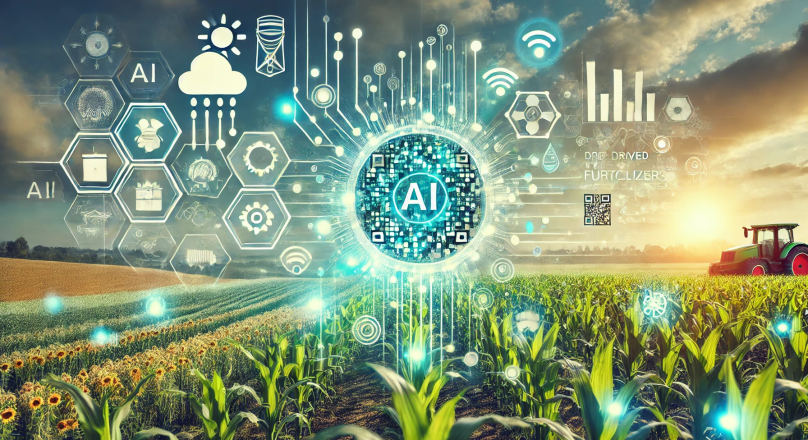
AI is the brain of modern agritech. Image classification models trained on millions of leaf images can identify 50 plus diseases across crops. Yield prediction models combine weather, soil, satellite, and historical yield to forecast with high accuracy.
Recommendation engines learn from thousands of farms. They know that in black cotton soil with late monsoon, a specific cotton variety with a particular spacing gives the best results. They personalize advice based on the farmer's past practices and risk appetite.
Generative AI is now creating voice based agronomists. A farmer can ask in Hindi, my chili leaves are curling, what to do, and get an immediate diagnosis with treatment steps and local shop availability. This removes the dependency on physical extension workers.
Farming efficiency is not just about growing more. It is about selling better. Agritech software connects farms to markets.
Digital procurement platforms allow food companies to source directly from FPOs with full traceability. Quality parameters are captured at the farm gate using phone based testing. Payments are instant via UPI. This reduces intermediaries and increases farmer share from 30 percent to over 60 percent.
Cold chain monitoring uses IoT loggers that track temperature and humidity from farm to retailer. If the chain breaks, alerts are sent and insurance claims are triggered automatically. This reduces post harvest losses, which are currently 15 to 20 percent for fruits and vegetables in India.
| Level | Technology | Farmer Experience | Next Step |
|---|---|---|---|
| 1. Digitized Records | Mobile app for farm diary | Basic logging | Add weather advisory |
| 2. Connected | Weather API, marketplace | Receives alerts, sells online | Deploy IoT sensors |
| 3. Precision | Sensors, drones, VRA maps | Input optimization | Integrate AI models |
| 4. Autonomous | AI agronomist, robotics | System manages farm | Full traceability and carbon credits |
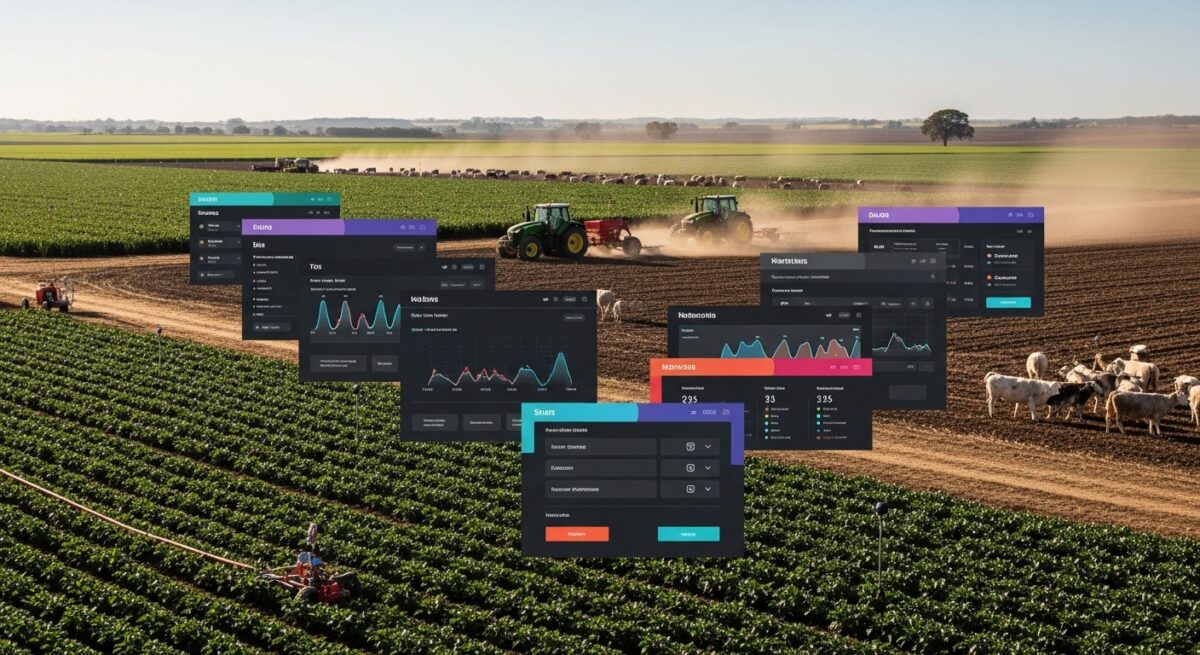
Agritech software has unique constraints. Connectivity is poor. Users have low digital literacy. Devices are low end. Power is unreliable. Dust and heat kill hardware.
We build offline first mobile apps that work without internet and sync when back in range. Interfaces use voice, images, and local languages, not text heavy forms. Apps are under 15 MB and work on Android 8 and above.
On the backend, we design for scale and resilience. Data pipelines ingest millions of sensor readings daily. We use time series databases for IoT data and geospatial databases for field maps. The architecture is similar to industrial IoT systems we build for our software development for manufacturing clients, where machines must run 24x7 and data cannot be lost.
Farm data is sensitive. It reveals yield, income, and land details. Farmers must own their data. Our platforms implement clear consent management, data encryption, and farmer controlled sharing.
For enterprises and FPOs, we provide role based access, audit trails, and compliance with data protection laws. Traceability data for exports is stored immutably, often using blockchain for EU and US compliance.
For a large cotton FPO in Gujarat, we built a farm management app with pest detection. Farmers reduced pesticide sprays from 7 to 4 per season, saving Rs 3,200 per acre while maintaining yield.
For a pomegranate exporter, we implemented satellite monitoring and traceability. Export rejection due to residue issues dropped from 18 percent to 4 percent because spray schedules were tracked digitally.
For an agri input company, we created a retailer and farmer engagement platform with soil test based recommendations. Input sales increased 22 percent because recommendations were trusted and personalized.
Adoption is the biggest challenge. Farmers need to see value in one season. We solve this with simple onboarding, assisted registration by field staff, and immediate benefits like weather alerts and mandi prices.
Data quality is another issue. Sensors fail, drones crash, farmers enter wrong data. We build validation rules, anomaly detection, and human in the loop verification.
Business models must work. Software cannot rely only on subscriptions from small farmers. Successful models combine SaaS fees from enterprises, input companies, and banks, with free core features for farmers.
We start with the field, not the screen. Our team visits farms, understands workflows, and co designs with agronomists. We then build modular platforms.
Our stack includes Flutter for cross platform apps, Node.js and Python for APIs and AI, PostGIS for geospatial data, TimescaleDB for sensor data, and Kubernetes for scaling. We integrate with IMD weather, Bhuvan and Sentinel satellites, and leading drone platforms.
We deliver in phases. Phase 1, digital farm records and advisory. Phase 2, IoT and satellite integration. Phase 3, AI models and marketplace. This ensures quick ROI and gradual adoption.
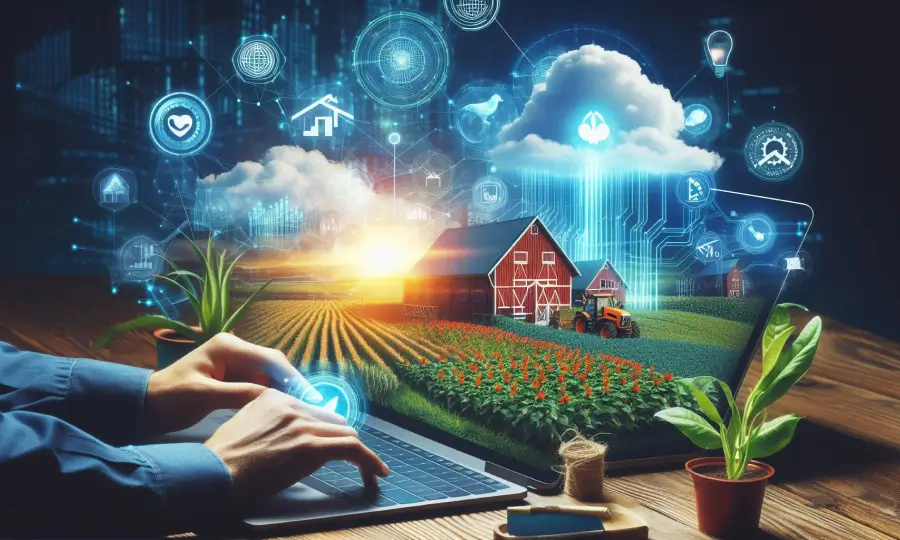
The next five years will see autonomous farming. Small robots will weed fields using computer vision. Drones will spray only infected plants. AI agronomists will manage thousands of farms simultaneously.
Carbon farming and sustainability will drive new revenue. Software will measure carbon sequestration, water saved, and chemical reduction, and convert these into carbon credits for farmers.
Digital public infrastructure like AgriStack will enable consent based data sharing between farmers, banks, and insurers. This will unlock instant credit and insurance based on real farm data, not paperwork.
Agritech software is improving farming efficiency and crop management by replacing guesswork with data, manual work with automation, and isolation with market connectivity. It helps farmers grow more with less, reduce risk, and earn better prices.
The technology is proven. The challenge is execution, building software that works in real fields, with real farmers, under real constraints. That is what BM Coder delivers.
Whether you are an agribusiness, FPO, input company, or startup, let's discuss your vision. Get a free consultation and product roadmap from BM Coder.
Email: [email protected]
WhatsApp: +91 95869 79730
Author: parth
